









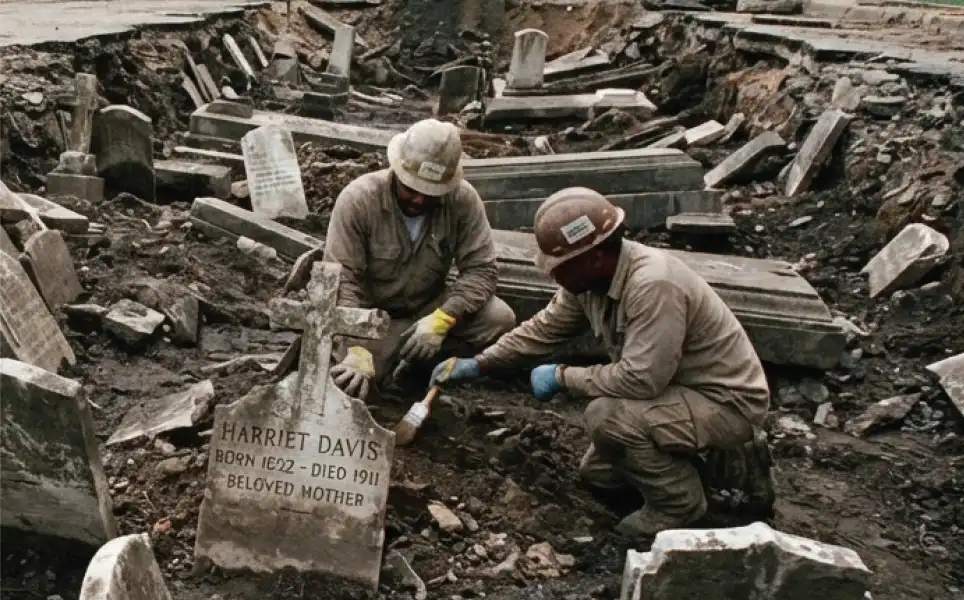
An archaeological report confirmed that human remains found beneath Lockwood Drive in Houston’s Fifth Ward belong to Buffalo Soldiers, formerly enslaved individuals, and early residents. These findings revealed that the historic Evergreen Negro Cemetery was not fully cleared before the roadway was constructed over it decades ago. The discovery has prompted intense local news coverage regarding historical preservation, municipal accountability, and the proper honoring of these African American trailblazers.
The Evergreen Negro Cemetery, located near Market Street and Lockwood Drive in Houston’s historic Fifth Ward, is the city’s third-oldest African American burial ground. Founded in 1887 by a group of leaders including Alexander Kelley—a prominent local businessman who was born into slavery—the sacred site serves as the final resting place for former slaves, Buffalo Soldiers, and veterans of both World Wars. In the mid-20th century, municipal expansions split the graveyard into two sections to accommodate Interstate 10 and the widening of Lockwood Drive, paving over hundreds of resting sites.
Designated as a Historic Texas Cemetery in 2009, it has recently been the focus of major community-led rehabilitation efforts, including a March 2026 ceremony where the remains of 39 displaced individuals were officially reinterred.
The reclamation of Evergreen Cemetery serves as a reminder that history does not exist only in museums and textbooks. Sometimes it rests quietly beneath old trees and weathered stones, waiting for a community to remember. By preserving the cemetery, supporters are not simply restoring a piece of land; they are reclaiming a legacy and ensuring that the people buried there continue to have a place in the historical record.