








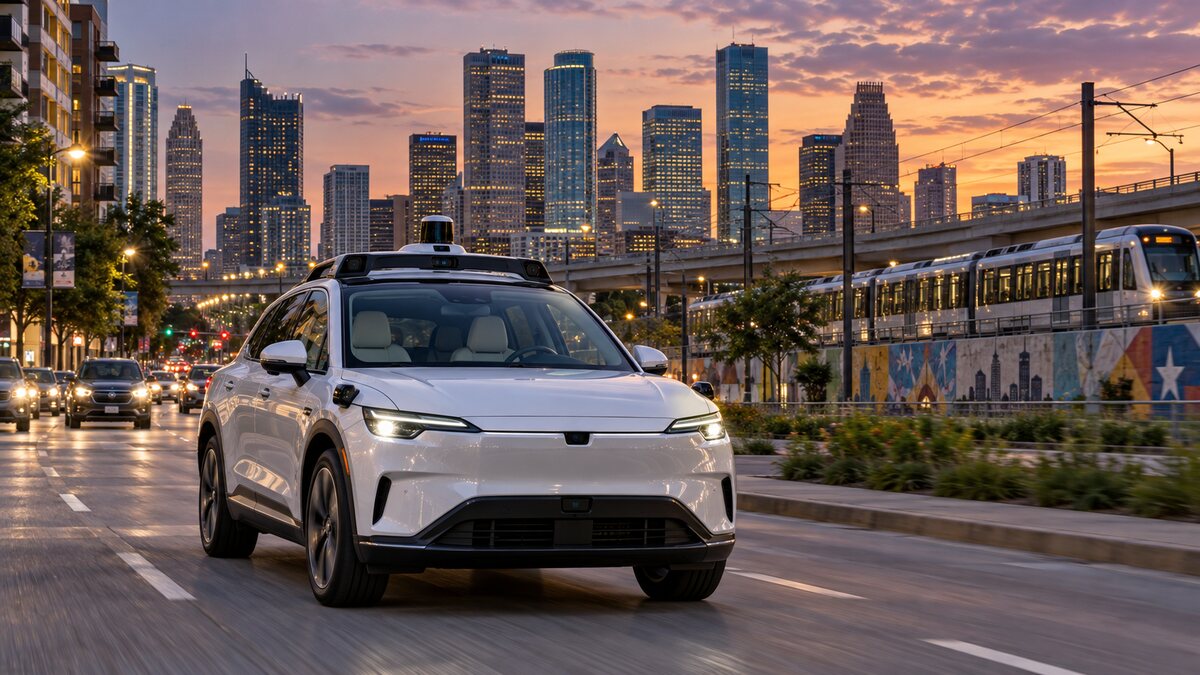
HOUSTON — Tesla expanded its driverless robotaxi service across a wider stretch of Houston on Monday, bringing autonomous rides from the original northwest Harris County zone into several central neighborhoods.
The new service map reaches parts of Bellaire, the Heights, Montrose, Midtown, downtown Houston and East Downtown, according to a map posted Oct. 26 by Tesla’s Robotaxi account. The company’s first Houston zone, covering roughly 20 square miles around Jersey Village, remains active.
The expansion gives more residents access to Tesla’s ride-hailing network as Houston rapidly becomes a major market for autonomous transportation. The Houston fleet currently uses Model Y vehicles, according to the Houston Chronicle. Those vehicles operate without a human driver or front-seat safety monitor.
Tesla launched the Houston service in April with a limited northwest Harris County footprint. The company has not publicly detailed the number of vehicles assigned to the expanded Houston zone, how many paid trips it expects to provide or whether every street inside the mapped area will be available at all times. Riders should rely on Tesla’s app for current availability and pickup boundaries.
The move intensifies competition in a crowded local market. Waymo opened its Houston robotaxi service to the public in August. Nuro is testing autonomous technology with safety operators, while Uber, Nuro and Lucid have announced plans for another Houston robotaxi service in 2027. Amazon-backed Zoox also began testing in Houston this fall, initially using retrofitted vehicles with safety drivers.
Tesla told investors in its second-quarter 2026 update that Houston was among the markets where it was ramping unsupervised robotaxi operations. The company is also producing the Cybercab, a separate two-seat vehicle designed without conventional controls.
That distinction matters because the National Highway Traffic Safety Administration is separately examining whether Tesla’s steering-wheel-free Cybercabs comply with federal safety rules. The Associated Press reported that the review concerns the self-certification process used for Cybercabs deployed in Austin. The Houston service described in Monday’s announcement currently uses conventional Model Y vehicles rather than Cybercabs.
For Houston residents, the expansion represents a significant shift from a small suburban test area to service connecting multiple residential, business and entertainment districts. It also raises practical questions about accessibility, emergency response, passenger safety and how autonomous fleets will interact with Houston’s complex roads, rail lines, flooding risks and heavy traffic as the market grows.
Sources: Tesla Robotaxi service announcement; Houston Chronicle; Tesla Q2 2026 update; Associated Press.