








HOUSTON — The Houston Health Department will receive $12 million over four years to expand coordinated treatment and recovery services for people experiencing homelessness alongside serious mental illness, substance-use disorders or both, federal officials announced Friday.
Houston was one of eight communities selected for the new Safety Through Recovery, Engagement, and Evidence-based Treatment and Support program, known as STREETS. Each recipient is scheduled to receive $3 million annually for four years.
U.S. Health and Human Services Secretary Robert F. Kennedy Jr. announced the awards in Houston on Oct. 2. The Department of Health and Human Services said the nationwide program will distribute $96 million and is administered through the Substance Abuse and Mental Health Services Administration.
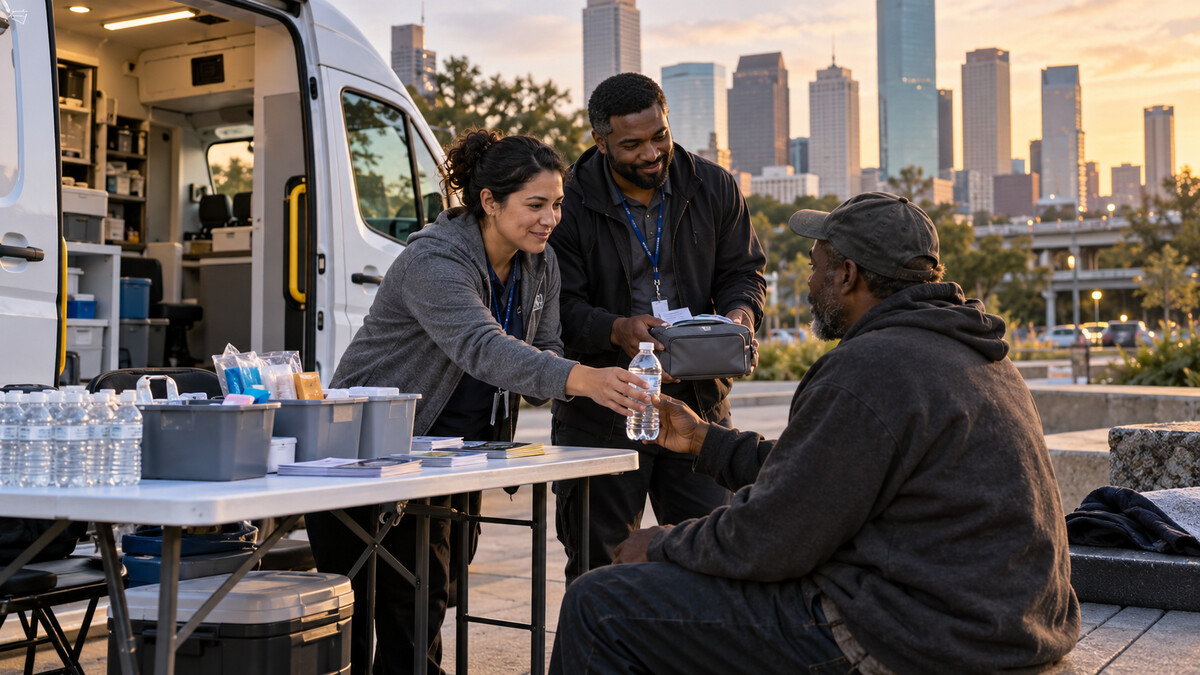
Houston’s award will go to the Health Department’s Human Services Division. Federal officials said the program is intended to bring evidence-based treatment directly to people living without stable housing and connect that care with recovery services, housing resources and other community support.
Coordinating services around people in crisis
People experiencing homelessness and behavioral-health emergencies often move among emergency rooms, shelters, outreach teams, police, courts and treatment providers. Those systems may operate separately, requiring a person in crisis to repeat assessments or navigate several agencies to receive help.
STREETS is designed to build a more coordinated response. HHS said participating communities should connect local government, health-care providers, housing organizations, law enforcement, courts and recovery programs rather than leaving individuals to assemble those services themselves.
The federal agency calls the model “Treatment First.” Under that approach, outreach and clinical care begin the process, while sustained recovery support, housing assistance and other services are intended to help participants reach stability and self-sufficiency.
Kennedy said the initiative is meant to take treatment directly to people on the streets and provide a path toward recovery. SAMHSA Chief of Staff Timothy Westlake said the goal is to organize fragmented systems around the person who needs help.
Houston joins seven other recipients
The other selected recipients are the Detroit Health Department; Miami-Dade County, Florida; Cherokee Nation in Oklahoma; Huntington, West Virginia; Robeson County, North Carolina; Tangipahoa Parish, Louisiana; and the Alcohol, Drug Addiction and Mental Health Services Board serving Montgomery County, Ohio.
The awards form part of a broader federal behavioral-health effort announced earlier this year. In June, HHS outlined more than $700 million in funding opportunities for mental-health care, addiction prevention and treatment, the 988 Suicide and Crisis Lifeline, and community behavioral-health clinics. STREETS accounted for $96 million of that package.
The Houston award arrives as local governments nationwide debate how to respond to visible homelessness, untreated mental illness and addiction without relying solely on emergency rooms, short-term shelter or arrest. The federal program links treatment with public-safety goals but also emphasizes continued engagement and support after the first contact.
HHS did not provide a detailed Houston implementation schedule in Friday’s announcement. Key next steps will include identifying the local providers and outreach partners, defining who is eligible, and establishing how the city will measure treatment access, housing connections, repeat homelessness and use of crisis services.
For Houston residents, the award represents a significant new investment in street outreach and behavioral-health care. Its long-term impact will depend on how quickly the city turns the four-year grant into accessible services and whether agencies can maintain the coordinated system after the federal funding period ends.