







By Charles Potter
Every Fourth of July, I gather with family and friends just like millions of other Americans. We barbecue, laugh, watch fireworks, and thank God for another year of life.
But while many people celebrate America’s independence without a second thought, I can’t help but remember a chapter of my life that forever changed how I view freedom, patriotism, and what it truly means to serve this country.
In 1963, I was a young man with a dream.
I wanted to fly jets.
When I joined the United States Air Force, I believed I was taking the first step toward making that dream come true. My recruiter told me I could earn my GED, attend Officer Candidate School, and eventually become a pilot.
I believed every word.
About ten or eleven days into basic training, Tech Sergeant Poole called me aside and asked, “Airman Potter, why are you in this man’s Air Force?”
I proudly answered, “Sir, I’m here because I want to earn my GED, go to Officer Candidate School, and learn to fly jets.”
He looked directly at me and said, “You ain’t never flying no damn airplane.”
I was stunned.
A few days earlier, around three o’clock in the morning, Tech Sergeant Poole had awakened everyone in the barracks by beating his baton against a trash can. We were ordered downstairs to watch an 8mm training film about military discipline and what happened to service members who got into trouble.
What struck me most wasn’t just the message—it was who was being shown. Most of the people portrayed in the military prison were people of color. Even then, something didn’t feel right.
Then came the moment that changed everything.
When Sergeant Poole questioned me again, I simply told him the truth.
“Sir, today is May 17, 1963. I was born September 18, 1946. That makes me sixteen years old.”
His face turned red.
Within days, I was discharged from the Air Force.
I received what appeared to be an Honorable Discharge, and at sixteen years old, I thought everything would be fine.
I had no idea that one small code printed on my DD-214 would haunt me for years.
When I returned to St. Louis, I tried to move forward with my life. I applied for a job with the Post Office. I passed the examination but was never hired. I applied at McDonnell Douglas thinking that if I couldn’t fly airplanes, maybe I could help build them.
Again, no job.
Everywhere I went, doors closed.
I couldn’t understand why.
Finally, I asked a friend who worked at the Missouri State Employment Service in the Veterans Department to review my military records.
She looked over my DD-214 and immediately noticed something I had never paid attention to.
There was an SPN—commonly called a “SPIN Number.”
Mine was 3719.
She pulled out a government reference book, found the code, looked at me, and began laughing—not because it was funny, but because she couldn’t believe what she had discovered.
She said, “Charles, this code says you’re a homosexual.”
I was speechless.
That one administrative code completely misrepresented who I was. During the 1960s, that designation carried enormous social stigma and could instantly disqualify someone from employment, especially jobs connected to the federal government or government contractors.
Suddenly, everything made sense.
It wasn’t my qualifications.
It wasn’t my work ethic.
It wasn’t my character.
It was a code on a government document that followed me everywhere I went.
I was furious.
I marched into the Veterans Administration demanding answers. I threatened to sue the government because nothing in my conduct, my service, or my life justified that label.
A respected attorney in St. Louis eventually explained the reality to me. Suing the federal government required permission, years of litigation, and more money than most working people could ever afford.
The government had made the mistake.
I was left to live with the consequences.
Years later, I learned I wasn’t alone.
Many Vietnam-era veterans received Separation Program Numbers (SPNs) that carried hidden meanings unknown to the service member but understood by employers and government agencies. Some codes affected employment opportunities long after veterans had served honorably.
Many Black veterans already faced discrimination because of the color of their skin. Some also carried invisible burdens from military service. Others came home with physical injuries, emotional trauma, or what we now recognize as PTSD.
Then they had to fight another battle simply to find work and provide for their families.
When people ask me what the Fourth of July means, I tell them this:
I love America.
I served America.
I still believe this is one of the greatest nations in the world.
But loving your country doesn’t mean pretending it has always treated everyone fairly.
Real patriotism requires honesty.
It means acknowledging that African Americans have fought in every major American conflict while too often returning home to segregation, discrimination, and unequal opportunity.
It means remembering the workers whose livelihoods disappeared when industries closed and manufacturing jobs left American communities.
It means recognizing that freedom is not something we simply inherit—it is something every generation must continue pursuing.
And one of the most important ways we protect that freedom is by exercising our right to vote.
Too many men and women sacrificed their lives, their health, and their futures so that all Americans could have a voice in our democracy. For African Americans especially, the right to vote was won through generations of courage, sacrifice, protest, and perseverance.
Every election is an opportunity to honor those sacrifices. Whether we agree or disagree with those in office, our responsibility is to stay informed, participate, and make our voices heard at the ballot box. Change does not happen by sitting on the sidelines.
Today, I no longer carry anger.
I carry perspective.
I celebrate the Fourth of July because I cherish my family, my faith, and the blessings God has given me.
But I also remember those whose sacrifices were forgotten, whose opportunities were stolen, and whose service was never fully honored.
My story is only one among thousands.
If sharing it helps America better understand its history, then perhaps it also helps us move closer to becoming the nation we have always claimed to be.
As we celebrate our independence, let us also renew our commitment to one another. Let us teach our children the truth about our history, honor those who served, love our neighbors, and never take our freedoms for granted. And when Election Day comes, let us show our gratitude not only with words, but with our votes.
Voting is one of the most powerful freedoms we possess, and it remains one of the greatest ways we can help shape a better America for future generations.
That, to me, is what Independence Day should represent—not just celebrating our freedom, but continuing the work of making liberty, justice, and opportunity a reality for every American.
About the Author
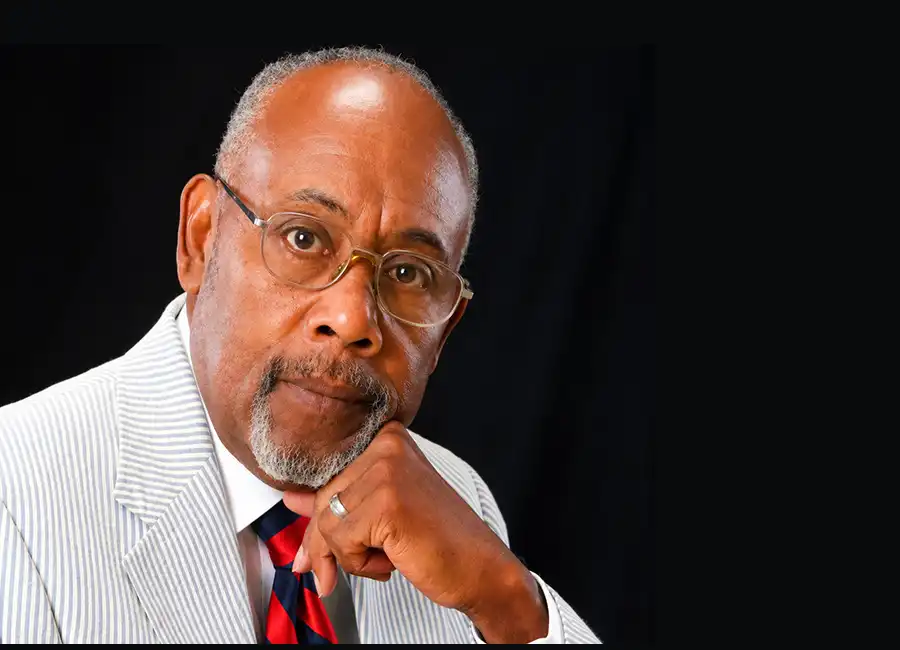
Charles Anthony Potter is the founder of Developing Futures Scholars Inc., a nonprofit organization dedicated to helping students prepare for higher education through its 12 Steps to College Success program.
For more information, visit https://developingfuturescholars.org/.