








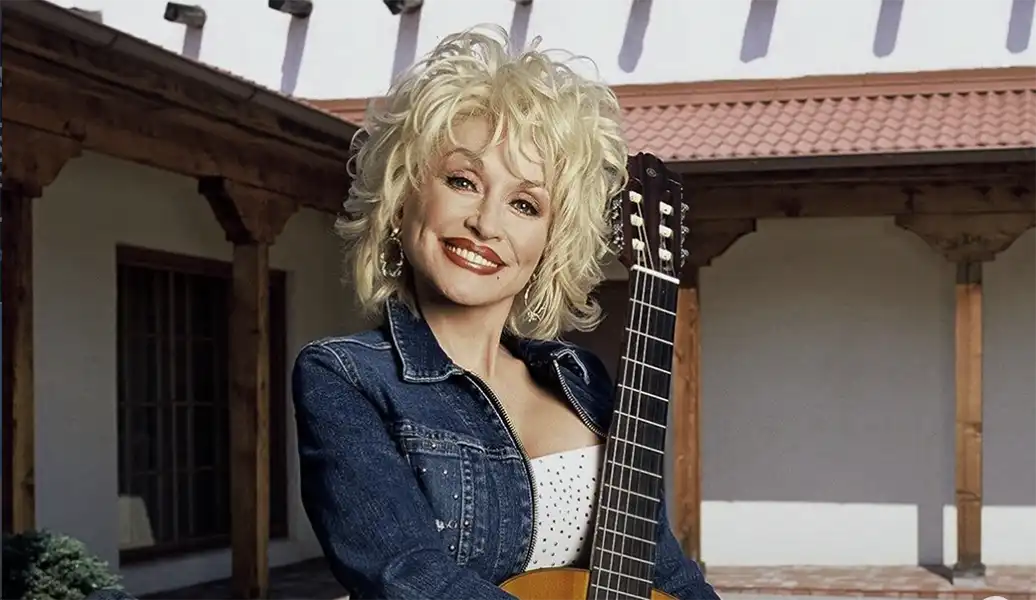
NASHVILLE, Tenn. — Dolly Parton, the country music legend whose songs, humor and generosity made her one of America’s most widely embraced entertainers, has died at 80.
Parton died Tuesday in Nashville after a brief battle with cancer, according to a statement from her publicist. Her death prompted tributes from musicians, political figures and fans across generations, reflecting the unusual breadth of an artist whose appeal stretched well beyond country music.
For the African American community, Parton’s legacy also carries a distinctive story.
Her career intersected with Black music through one of the most recognizable recordings in modern pop history. She publicly supported racial justice at a moment when many entertainers avoided the subject. She used money earned from Whitney Houston’s recording of one of her songs to invest in a predominantly Black Nashville neighborhood. And late in her career, she joined Beyoncé on an album that challenged long-standing assumptions about who belongs in country music.
Parton’s story was rooted in country music, but her influence never remained confined there.
A Voice That Crossed America’s Divides
Parton spent decades cultivating an image that was unmistakably Southern but rarely exclusionary.
She grew up in poverty in rural East Tennessee as one of 12 children and built a career that eventually reached country, pop, film, television, Broadway and philanthropy. Her songs included “Jolene,” “Coat of Many Colors,” “9 to 5” and “I Will Always Love You.”
What distinguished Parton culturally was not simply popularity.
She developed a public identity that allowed people with very different backgrounds and political beliefs to feel some connection to her. While she generally resisted partisan politics, she emphasized kindness, dignity and practical help for people in need.
That broad appeal became particularly striking during years when American politics grew increasingly polarized.
Parton rarely told audiences which political side to join. Instead, she frequently returned to values that were easier to share across those divisions: family, work, education, compassion and respect.
That approach did not mean she remained silent on every social issue.
When Parton believed something had crossed a moral line, she sometimes spoke with unusual clarity.
Whitney Houston Changed Dolly Parton’s Song Forever
Parton wrote and originally recorded “I Will Always Love You” in the 1970s.
The song was already a country success before Whitney Houston transformed it into a global pop phenomenon for the 1992 film The Bodyguard.
Houston’s rendition became a record-breaking hit and won Record of the Year at the 1994 Grammy Awards. Parton was there when Houston received the Grammy for Best Female Pop Vocal Performance, and Houston publicly thanked Parton for writing the song.
For Parton, Houston’s version was never something she treated as a threat to her authorship.
She repeatedly celebrated it.
Years later, Parton said Houston’s crossover version helped audiences recognize her more seriously as a songwriter and called the recording one she would always treasure.
That relationship between the two recordings became an enduring example of how a song can move between musical traditions.
Parton wrote it from within country music.
Houston brought her gospel-trained power, R&B sensibility and extraordinary vocal control to it.
The result became bigger than either genre.
For many Black listeners, “I Will Always Love You” is inseparable from Whitney Houston. For country fans, its roots remain tied to Dolly Parton.
Both histories can exist at the same time.
Parton Used Whitney Houston Royalties in a Black Nashville Neighborhood
The connection between Parton and Houston extended beyond music.
Parton later revealed that she used some of the royalties she earned from Houston’s version of “I Will Always Love You” to purchase a commercial property in a predominantly Black Nashville neighborhood.
She described the investment as a fitting way to honor what Houston had brought to the song.
That decision became one of the more meaningful details in Parton’s relationship with Black culture.
The royalty money generated by a Black woman’s historic interpretation of her song was, in part, reinvested into a Black community.
It did not make Parton a Black cultural figure, nor did she present herself as one.
But it demonstrated a recognition that Houston’s contribution had created extraordinary value — culturally and financially — and that the relationship deserved respect.
Speaking Out for Black Lives
Parton generally avoided overt political debate throughout her career.
But during the nationwide racial justice protests of 2020, she publicly supported the Black Lives Matter movement.
In an interview, Parton made her position unmistakable, saying, “Of course Black lives matter.”
The statement attracted attention precisely because Parton was not known for regularly inserting herself into partisan disputes.
She also changed the name of her Civil War-themed dinner attraction after criticism of its use of “Dixie,” removing the Confederate-era reference and renaming it Dolly Parton’s Stampede.
These actions did not erase complicated debates surrounding race and country music.
But they placed Parton among the prominent white country artists willing to acknowledge that racial symbolism and inequality mattered.
Beyoncé, Country Music and a New Generation
Parton’s connection to Black artists continued late into her career.
She appeared on Beyoncé’s groundbreaking 2024 album Cowboy Carter, a project that placed Black contributions to country and American roots music at the center of a global cultural conversation.
Parton appeared on the interlude “Dolly P,” while Beyoncé dramatically reimagined “Jolene.” Parton openly embraced Beyoncé’s reinterpretation rather than insisting that her original version remain untouchable.
The collaboration carried historical weight.
Black artists helped shape the musical traditions that evolved into country music, yet Black performers have often struggled for recognition within the modern country industry.
Beyoncé’s project forced a new generation to reconsider those boundaries.
Parton’s willingness to participate helped connect country music’s most recognizable elder stateswoman with one of the most influential Black artists in contemporary music.
Her Philanthropy Reached Far Beyond Music
Parton’s legacy also extends into education and philanthropy.
She launched Dolly Parton’s Imagination Library in 1995, initially serving children in East Tennessee before it grew internationally. The program mails free books to young children, regardless of family income.
By 2026, the program had distributed more than 304 million books.
Parton said the program was inspired by her father, who struggled with reading after leaving school early to work.
The lesson behind the project had particular relevance in communities where access to books and early literacy resources can shape educational opportunity.
Her charitable work also included disaster relief, medical research, hospitals and community assistance.
She was not simply attaching her name to philanthropy.
Again and again, Parton built programs that delivered something tangible: books, scholarships, emergency money or medical support.
That practicality helped explain why affection for her crossed so many cultural boundaries.
A Country Star With a Broader American Legacy
Dolly Parton will always be identified first with country music.
She earned that place through songwriting, performance and a career that stretched more than six decades.
But reducing her legacy to country music alone misses part of the story.
Her work crossed into pop.
Her songwriting became inseparable from one of Whitney Houston’s greatest performances.
Her relationship with Beyoncé placed her inside a modern conversation about Black artists and country music.
Her public stance on racial justice demonstrated that avoiding partisan politics did not require avoiding basic questions of equality.
And her philanthropy reached children and families far beyond the audience that bought her records.
That may be why her death feels different from the passing of many celebrities.
Dolly Parton belonged to country music, but millions of Americans felt that some part of Dolly belonged to them, too.
For Black audiences, her legacy is not about pretending that she came from the African American experience.
She did not.
It is about recognizing the moments when her career crossed that experience with respect — through Whitney Houston, through racial justice, through community investment, through Beyoncé and through a belief that generosity should not stop at cultural boundaries.
At a time when Americans often struggle to agree on entertainers, institutions, politics or even history, Parton accomplished something increasingly rare.
She gave people across those divisions reasons to smile, sing and occasionally see one another differently.
And that may be one of the most important parts of the legacy she leaves behind.