








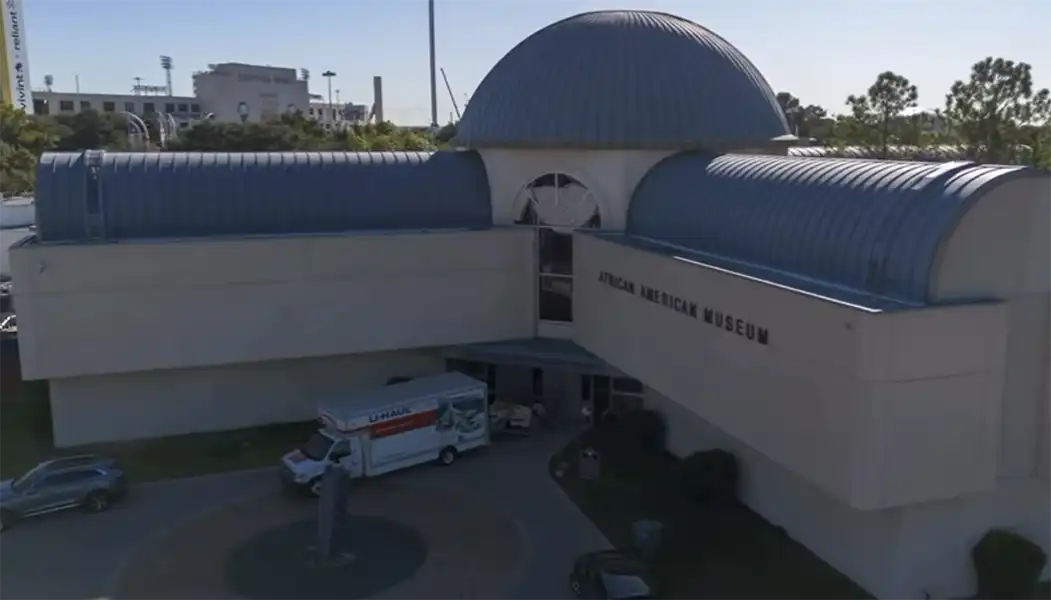
Leaders from the African American Museum, Dallas and the City of Dallas joined community partners earlier today to celebrate the unveiling of major facility improvements and announce new partnerships and investments supporting the Fair Park institution.
Building upon the legacy created by museum founder Dr. Harry Robinson Jr. during his 50-year tenure, the multi-million-dollar enhancements are designed to strengthen preservation efforts, modernize public spaces and system integrations, and enhance the visitor experience for generations to come.
“This remarkable restoration work was made possible through the guidance and responsive collaboration of the City of Dallas leadership and staff, our donors, our community partners, and Texas Parks and Wildlife Department,” said Lisa Brown Ross, president and CEO of the African American Museum, Dallas. “We are thankful for their belief in the Museum’s mission and to the Fair Park cultural district.”
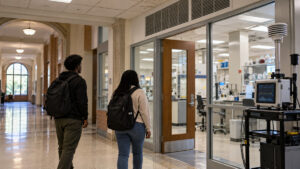
During the museum’s recent three-month closure, the institution completed critical infrastructure, security and technology upgrades, including facility-wide safety improvements, environmental monitoring systems, HVAC and boiler enhancements. New protections designed to safeguard the museum’s archives and collections from fire, smoke and environmental damage were also implemented.
“The African American Museum is a valued Fair Park campus partner with deep roots in Dallas and the Fair Park communities. When you experience the museum’s new look, you’ll see how these improvements continue its legacy of opening doors to new cultural opportunities. These investments reflect the State and the City’s ongoing commitment to reinvesting in Fair Park. This is just the beginning of much more ahead, Fair Park is back, and we’re no longer just talking about progress, we’re making it happen.” said John D. Jenkins, director of Dallas Park and Recreation.
Additionally, the improvements include significant upgrades to public-facing spaces throughout the museum. The auditorium underwent a major transformation with accessibility improvements, a rebuilt stage upgraded with new audio and lighting systems, replacement flooring and ongoing stage curtain enhancements. Public galleries and assembly areas received fresh interior painting and new flooring, while additional ADA signage, hearing-assistance devices and a new visitor welcome desk are under way.
“This investment in the African American Museum reflects Dallas’ commitment to preserving and celebrating the history, culture and contributions of the Black community for generations to come,” said Dallas City Manager Kimberly Bizor Tolbert. “The museum has long been an important part of Fair Park and our city’s cultural identity, and these improvements will help ensure residents and visitors continue to experience the stories, art and history that make this institution so meaningful.”
Ross noted the establishment of leading-edge preservation capabilities through the creation of new archives storage and conservation spaces, compact archival shelving and ongoing development of specialized conservation laboratories and storage areas tied to the Freedman’s Cemetery collection.
At the same time, museum staff, interns and volunteers worked extensively to inventory, catalog and rehouse the museum’s collections, with more than 1,000 pieces of African American fine art, folk art and historic Black Dallas photography cataloged to date. The work also includes new interpretive planning and technology enhancements for the forthcoming Facing the Rising Sun: Freedman’s Cemetery exhibition to create a more engaging experience for visitors, which will be unveiled later this year.
“I’m elated to see these improvements in action,” said Dallas City Council Member Adam Bazaldua. “These investments at the African American Museum reflect Dallas’ commitment to preserving Black history, strengthening Fair Park’s cultural institutions, and ensuring future generations can experience and learn from the stories that shaped our city.”
African American Museum funding comes from federal and philanthropic sources
Funding for the building improvements was made possible primarily from a $4.05 million dollar grant from Texas Parks and Wildlife Department, administered through the City of Dallas and overseen by the Dallas Park and Recreation Department and the Office of Arts and Culture.
Additionally, former Texas State Rep. Helen Giddings announced a $250,000 gift from H-E-B to support the museum renovations.
“The African American Museum’s first 50 years represent an undeniably extraordinary chapter of achievement and service to our community and our nation’s cultural history,” said Rep. Giddings. “Yet we believe the most exciting chapter is still ahead. With the continued partnership of civic leaders, supporters, and friends across the community, the Museum is positioned to grow in ways that will inspire generations to come.”
The new conservation labs – designed to preserve the museum’s archival, fine art and folk art collection including historic documents, photographs, rare books and recordings – are being funded through two major resources. A $250,000 grant from Communities Foundation of Texas helped establish the Harry Robinson Jr. Research and Conservation Lab, while a $3 million grant from the Texas Historical Commission will fund Phases II and III of the project, including a fully equipped Conservation Center and new climate-controlled storage areas.
Major refresh, Mandela exhibition arrive ahead of FIFA World Cup
The improvements come as Dallas prepares to welcome millions of visitors from around the world for the 2026 FIFA World Cup, including FIFA Fan Festival activities at Fair Park. As part of those festivities, the African American Museum will present Mandela: The Official Exhibition, opening June 13 and running through Nov. 1, 2026. The exhibition explores the life and legacy of Nelson Mandela, one of the world’s most influential champions of freedom and justice, whose vision of reconciliation, leadership and service continues to inspire people across the globe. The exhibition also highlights Mandela’s passion for fútbol and his efforts to help bring the FIFA World Cup to South Africa.
Built in 1993 at the main entrance to Fair Park, the museum’s 38,000-square-foot ivory stone facility houses more than 65 collections, including one of the nation’s most significant African American folk art collections, more than 40,000 photographs and prints from Sepia magazine, an extensive archive of jazz recordings, and a wealth of materials documenting the rich history of Black Dallas.
GENERAL INFORMATION. The African American Museum is located at 3536 Grand Ave., Dallas, TX 75210. Admission is free. Visitor parking is available in nearby designated lots, subject to availability and event-related operational changes during major Fair Park events. For more information, go to aamdallas.org.
[Photo: Instagram]