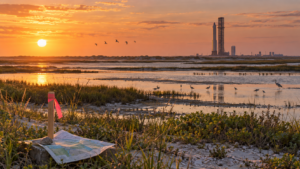








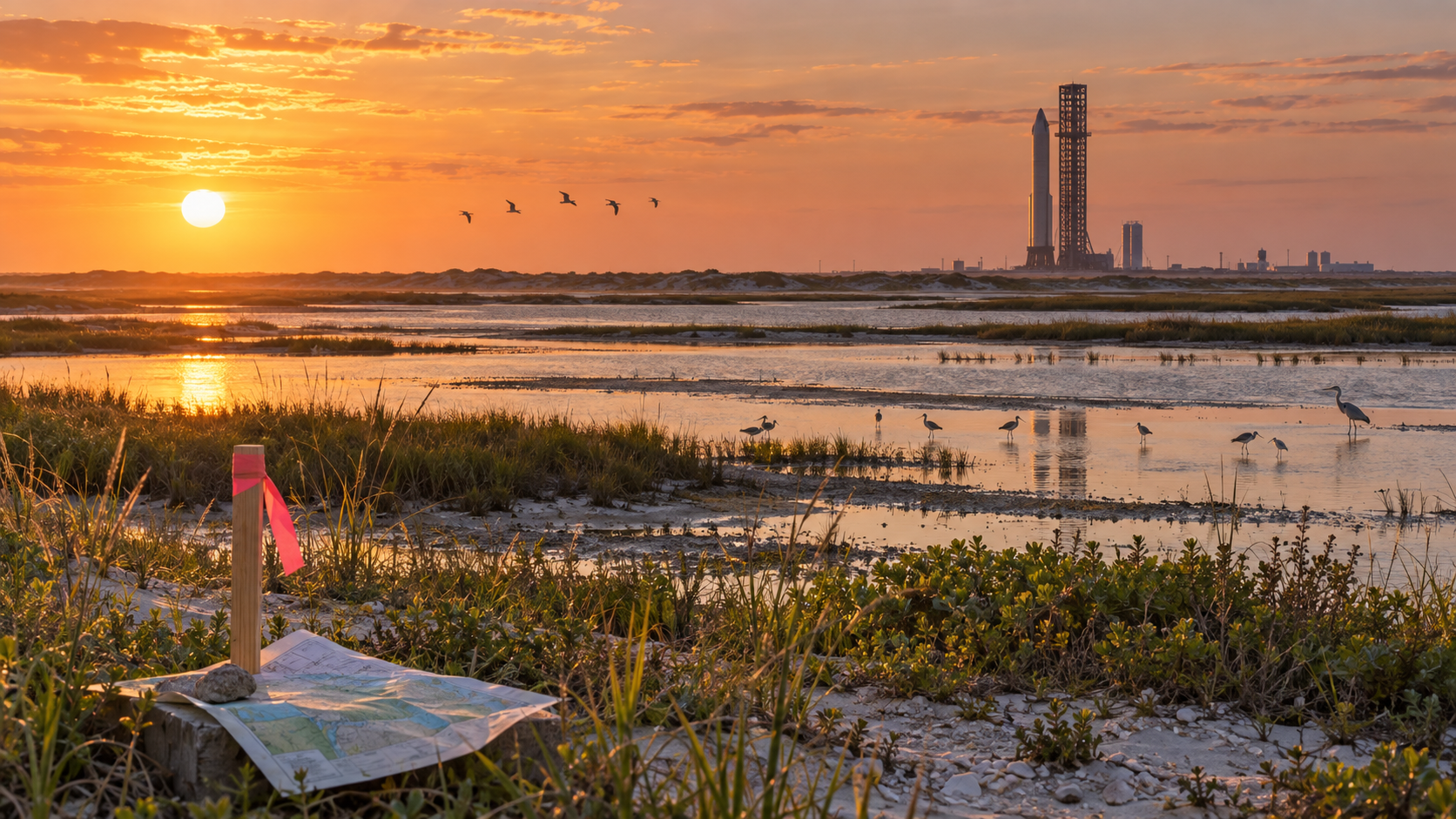
A federal judge has declined to temporarily block a controversial South Texas land exchange that would give SpaceX more than 700 acres inside the Lower Rio Grande Valley National Wildlife Refuge.
U.S. District Judge Fernando Rodriguez Jr. denied opponents’ request for a preliminary injunction Monday, September 21, allowing the Trump administration’s approved exchange to move forward while the underlying lawsuit continues.
The dispute centers on federally protected land near SpaceX’s Starbase launch operations and the U.S.-Mexico border. Under the deal approved by the U.S. Fish and Wildlife Service in June, SpaceX would surrender 683 acres it owns in return for a larger federal parcel closer to its launch site.
The Lower Rio Grande Valley National Wildlife Refuge covers approximately 103,000 acres across four Texas counties. Its connected tracts protect wildlife habitat, migration corridors and sites with cultural and historical importance.
According to The Associated Press, Rodriguez ruled that environmental and tribal opponents had not presented enough evidence at this stage to show that the exchanged property would suffer environmental, cultural or historical damage while the lawsuit is pending. The judge also found that delaying the transaction could interfere with SpaceX’s development schedule and contractual obligations.
The decision does not resolve the lawsuit or determine that the exchange is lawful. It only rejects the request to freeze the transaction during the litigation, and opponents have said they will continue their challenge.
The Center for Biological Diversity, which filed the case with other environmental and tribal groups, argues that the exchange transfers valuable public refuge land to a private corporation and could expose sensitive areas to development. The organization says the property has spiritual, historical and conservation significance for South Texas communities.
The Fish and Wildlife Service reached a different conclusion in its final environmental assessment. The agency found that the exchange would not significantly harm the region and said the land received from SpaceX would produce a net conservation benefit by improving habitat connections among protected areas.
The disagreement reflects a broader debate surrounding SpaceX’s rapid expansion at the southern tip of Texas. Supporters point to aerospace investment, jobs and the region’s growing role in commercial spaceflight. Critics have raised concerns about public access to nearby beaches, rocket-test accidents, noise and the long-term effect of industrial development on coastal habitat.
SpaceX has operated in the area for more than a decade. Its footprint has grown enough that company employees voted in 2025 to create a new local government called Starbase.
Neither the Fish and Wildlife Service nor SpaceX offered the AP a new comment following Monday’s ruling.
The next stages of the case will determine whether opponents can prove that federal officials failed to follow environmental or other legal requirements when approving the swap. For now, the court’s decision removes the immediate legal barrier to transferring the land, even as the fight over the refuge continues.
Source: The Associated Press.