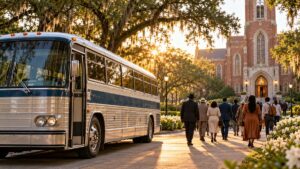









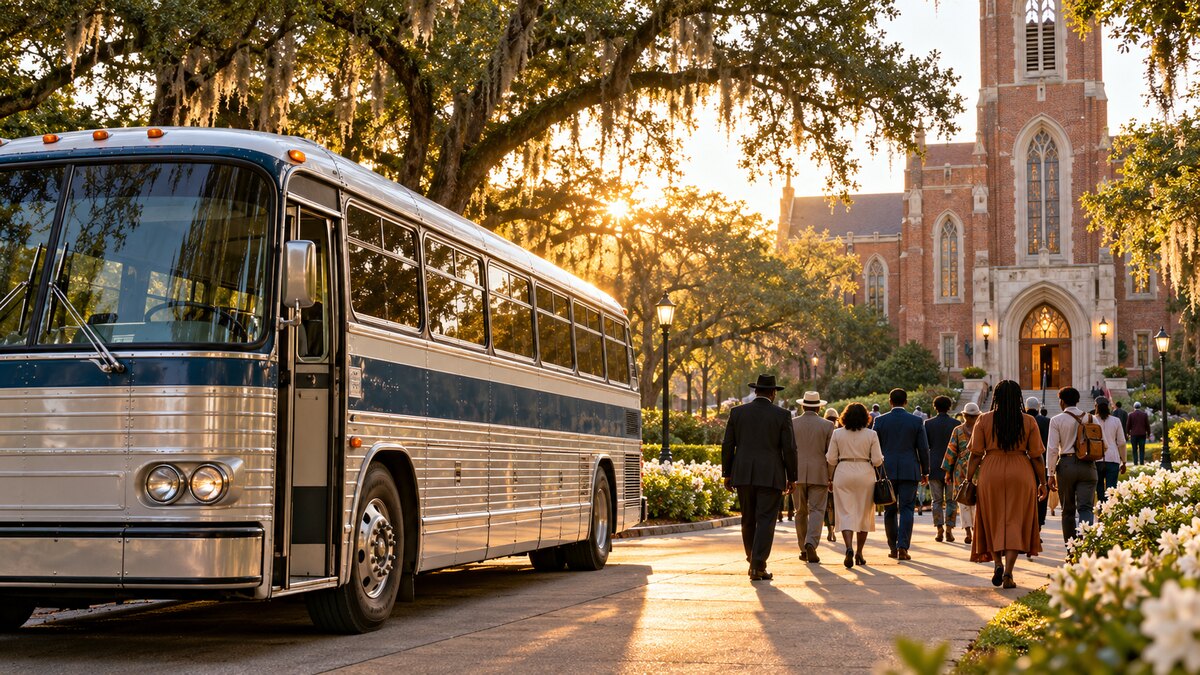
NEW ORLEANS — A multigenerational group of civil rights veterans, descendants, faith leaders and community advocates arrived at Xavier University of Louisiana on Wednesday, Oct. 28, completing by road the Washington-to-New Orleans journey that the original Freedom Riders were prevented from finishing by bus 65 years ago.
The 12-day commemorative trip began in Washington, D.C., on Oct. 17 and followed the route of the 1961 Freedom Rides through 19 cities, eight states and the District of Columbia, according to The Ride 2026. Organizers described the project as a nonpartisan effort to preserve civil rights history while encouraging voter participation, especially among students and young adults.
The original Freedom Riders challenged segregated interstate travel in the South. On May 14, 1961, a white mob attacked and firebombed one of their buses outside Anniston, Alabama. The 13 riders escaped the burning vehicle but were beaten. They later flew to New Orleans, where hotels refused them rooms and Xavier provided shelter at St. Michael’s Residence Hall.
Xavier’s historical account credits Norman C. Francis, then the university’s dean of men and later its longtime president, with helping protect the riders. Xavier is the nation’s only historically Black and Catholic university.
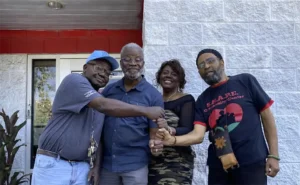
This year’s group retraced the interrupted road journey with stops that included Selma, Alabama, and Jackson, Mississippi, as well as historically Black colleges and universities. The delegation included original and legacy Freedom Riders, relatives of movement veterans and younger organizers. WVUE-TV reported that five riders completed the trip with a broader group of 67 participants.
At Xavier, the riders were welcomed during a ceremony at St. Katharine Drexel Chapel. Participants then joined a second-line procession to a statue honoring Francis, according to Verite News.
Kredelle Petway-Phillips, whose parents took part in the 1961 Freedom Rides, urged students to carry the movement’s civic work forward. “It’s up to you young people to vote and keep the legacy alive,” she said during the Xavier program, as reported by Verite News.
Stephen Thomas, who was 16 when he joined the original movement, also participated in the anniversary journey. Stops along the route paired historical remembrance with voter-registration and turnout efforts ahead of the Nov. 3 elections.
The arrival in New Orleans linked two generations of activism: the riders who risked their lives to confront Jim Crow segregation and students now being asked to defend access to the ballot. It also returned the Freedom Riders to a campus that offered safety when much of the city would not.
The 1961 rides helped force federal enforcement of rules prohibiting segregation in interstate bus and rail facilities. Sixty-five years later, the completed route served as both a tribute and a call to civic participation—ending where the original riders found refuge and where a new generation gathered to hear their story.