








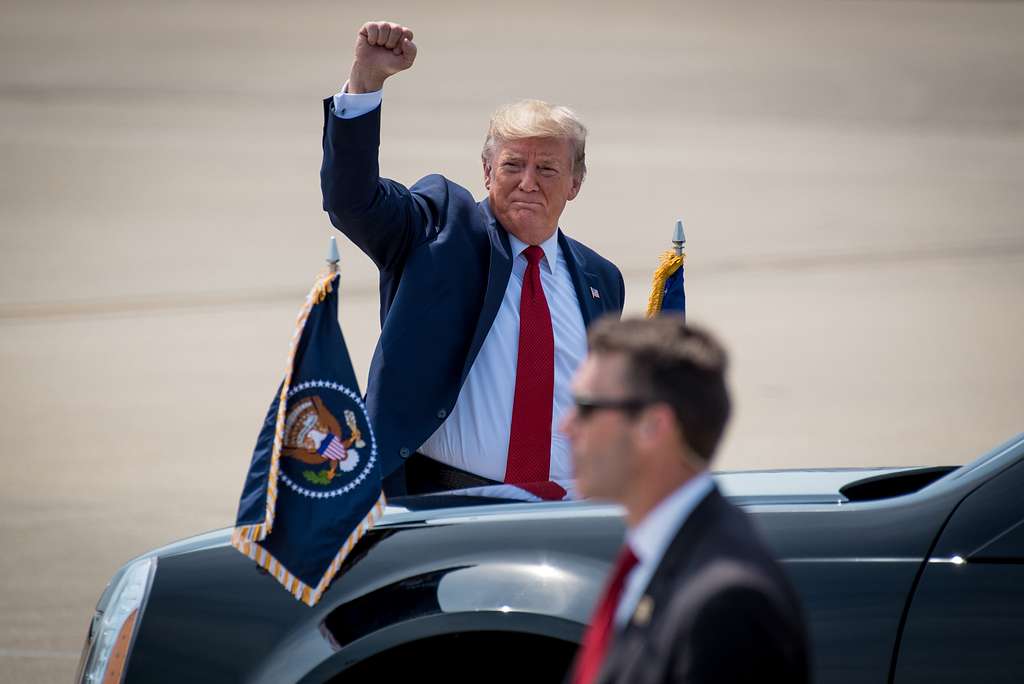
In Washington, having the most votes is only half the battle; you also need the person at the front of the room to call your name. This figure is the Senate Majority Leader, the legislative gatekeeper who determines which bills survive and which gather dust. Currently, a strategy by Trump allies to execute a Senate takeover to pass the SAVE Act is gaining traction, aiming to install leadership that prioritizes specific outcomes over Senate tradition.
At the core of this maneuver is the SAVE Act, a bill requiring documentary proof of citizenship for federal voter registration. While legislative hurdles for election integrity bills often cause them to stall, this new approach targets the decision-makers themselves rather than just the vote count. By strictly vetting Senate GOP leadership election candidates, proponents hope to swap procedural deadlock for a guaranteed vote, proving that controlling the calendar is often more powerful than the bill itself.
What the SAVE Act Changes for New Voters
Currently, registering to vote in a federal election relies largely on an honor system known as “self-certification.” You check a box on a form affirming you are a citizen, sign your name, and in most cases, that affirmation is accepted as truth. The Safeguard American Voter Eligibility (SAVE) Act proposes a fundamental shift to this standard by amending the National Voter Registration Act. Instead of taking an applicant’s word for it, this new federal proof of citizenship voting law would require election officials to physically verify a person’s status before processing their registration, moving the process from a “trust” model to a “verify” model.
Under these proposed rules, presenting a standard driver’s license—which non-citizens can legally obtain in many states—would no longer be sufficient for federal registration. To ensure only eligible voters are added to the rolls, the law mandates “Documentary Proof of Citizenship” (DPOC). To comply with the Safeguard American Voter Eligibility Act requirements, new voters would need to provide one of the following specific documents:
- A valid U.S. passport or passport card.
- A certified birth certificate issued by a state or local government.
- A Certificate of Naturalization for naturalized citizens.
- A government-issued photo ID card that explicitly shows a U.S. birthplace.
Beyond changing the paperwork, the legislation raises the stakes for violating the rules. The bill introduces stricter non-citizen voter registration penalties, including specific criminal charges for election officials who knowingly register ineligible individuals and immediate deportation risks for non-citizens who attempt to register. However, even with these strict provisions written on paper, turning this bill into enforceable law faces a massive obstacle in Washington: the Senate’s unique rules for stopping debate.
The Senate ‘Speed Bump’: Why Current Rules Block Election Reform
In the House of Representatives, a simple majority rules; if you have one more vote than the other side, you win. The Senate, however, functions less like a highway and more like a guarded checkpoint. While a final passage vote requires only a simple majority, the Senate first demands 60 votes to agree to stop debating and proceed—a procedural hurdle known as “cloture.” This mechanism empowers a minority group of Senators to block action indefinitely, acting as a massive barrier that stops bills before a final yes-or-no decision is ever made.
For the SAVE Act, this threshold presents a nearly insurmountable math problem. Even if every Republican supports the bill, they currently lack the numbers to overcome the Senate filibuster impact on election reform without help from across the aisle. Consequently, the legislation is effectively frozen. Unless proponents can either persuade opposition Senators to cross party lines or successfully lobby to change these procedural rules, the bill remains stuck in a state of permanent delay, regardless of its popularity with specific voting blocks.
These legislative hurdles for election integrity bills illustrate the immense difficulty of imposing strict federal oversight of state voter rolls. Because the current 60-vote requirement makes passing such sweeping mandates nearly impossible under normal circumstances, political strategists are looking for a workaround. Rather than trying to win over opponents, allies of the bill are focusing on a different solution: replacing the leadership to fundamentally alter how the Senate operates.
The Race for Leadership: Who Will Open the Gates for Trump’s Agenda?
Since the 60-vote rule acts as a locked gate, the person holding the keys becomes the most powerful figure in the room. The upcoming selection of a new Majority Leader is effectively a referendum on whether that gate stays locked or gets forced open. Candidates like John Thune, John Cornyn, and Rick Scott have faced intense pressure to declare exactly how they would handle the SAVE Act. For proponents of the bill, the goal isn’t just electing a manager; it is installing an ally willing to prioritize this legislation above traditional Senate decorum.
Traditionally, the Majority Leader sets the schedule, but a new Republican strategy for Senate majority leader involves a concept often called a “floor takeover.” This maneuver essentially means the rank-and-file Senators—not just the leadership—exert control to dictate what bills come up for a vote. By demanding that candidates commit to specific rule changes before the election even happens, Trump allies aim to ensure the new leader is pre-committed to bypassing the usual gridlock.
To actually get the SAVE Act past the 60-vote threshold, the new leadership is considering several aggressive tactics that would fundamentally change Senate floor takeover dynamics:
- The “Nuclear Option”: Changing Senate rules to allow specific bills to pass with a simple majority (51 votes) rather than 60.
- Recess Appointments: Using gaps in the legislative calendar to install officials or push policies without standard confirmation votes.
- Must-Pass Attachments: Linking the SAVE Act to essential funding bills, forcing opponents to vote “yes” to avoid a government shutdown.
How the SAVE Act Impacts State Elections and Federal Authority
While most Americans cast their ballots at local schools or community centers, the rules governing those elections sit at the center of a constitutional tug-of-war between state capitals and Washington, D.C. Traditionally, states hold the primary power to run elections, but Article I, Section 4 of the Constitution provides a critical “override button,” granting Congress the power to “make or alter” regulations for federal races. This specific constitutional authority over federal election laws is the legal foundation for the SAVE Act. Rather than allowing verification standards to vary wildly from one state to another, this legislation asserts federal supremacy to create a uniform standard, effectively overruling any local processes that do not meet the new, stricter proof-of-citizenship requirements.
This shift would drastically change how the SAVE Act impacts state elections on a daily operational level. Under current rules, often derived from the 1993 “Motor Voter” law, many states rely on an applicant’s sworn statement of citizenship rather than physical proof. The SAVE Act would flip this dynamic by mandating federal oversight of state voter rolls, requiring local election officials to cross-reference new registrants against Department of Homeland Security and Social Security Administration databases. This creates a direct conflict of SAVE Act vs current federal voter registration priorities: where the current system emphasizes ease of access, the new proposal enforces strict gatekeeping. Implementing these checks would require every county election office to adapt rapidly.
Tracking the Transition: What a Senate Shift Means for Your Vote
Recognizing the mechanics behind the Trump allies’ plan for a Senate takeover to pass the SAVE Act transforms the news from political noise into a clear map of legislative power. You now understand that the future of stricter voter ID requirements for federal elections depends less on public opinion and more on who controls the Senate gavel. The leadership race acts as the essential “gatekeeper,” determining whether this bill faces a vote or disappears into procedural limbo.
As the new term begins, watch the Senate leadership election closely; this specific vote is the leading indicator for the SAVE Act’s chances. If the new Majority Leader prioritizes this agenda, you will likely see immediate moves to address the impact of non-citizen voting on election outcomes through mandatory proof of citizenship. The true measure of this strategy’s success will be simple: a distinctive shift from permanent gridlock to a signed law.