







The U.S. Supreme Court has allowed the Trump administration’s expanded federal citizenship-verification database to operate while an appeal continues, reversing—for now—a lower-court ruling that had blocked the system over privacy and voting-rights concerns.
In a 6–3 emergency order issued Friday, September 25, the justices stayed a June ruling that struck down changes to the Systematic Alien Verification for Entitlements program, commonly known as SAVE. The decision means state and local election officials may again use the modified system to check the citizenship status of registered voters.
The order is a major change from the legal position in place earlier this month, when the U.S. Court of Appeals for the District of Columbia Circuit declined to lift the nationwide block. It is not a final judgment on the legality of the expanded database. The stay will remain in effect while the appeal proceeds and through any timely request for the Supreme Court to review the case fully.
SAVE was created to verify citizenship and immigration status for public-benefit programs. The federal government later linked it to Social Security Administration records and enabled officials to conduct bulk searches using full or partial Social Security numbers. Those records can include names, birth information, citizenship indicators and other identifying data.
In its unsigned order, the Supreme Court majority said federal immigration law requires the government to respond when state and local election officials request citizenship information. The majority concluded that the challengers’ arguments likely would not succeed and said the lower-court order interfered with federal assistance to election administrators.
Justices Sonia Sotomayor, Elena Kagan and Ketanji Brown Jackson dissented. Jackson wrote that the ruling risks burdening lawful voters, particularly recently naturalized citizens whose status may not be current in Social Security records. She said an inconclusive database result could lead officials to demand additional proof of citizenship and potentially cancel a voter’s registration if the documentation is not provided in time.
The dissent pointed specifically to Texas. Citing the trial-court record, Jackson wrote that one Texas voter had her registration revoked without her knowledge and that two others had to prove their citizenship to remain registered.
Reuters reported that voting-rights groups contend the database can contain outdated citizenship information, causing naturalized Americans to be mislabeled as noncitizens. The system’s overall error rate has not been made public. The Department of Homeland Security says the expanded tool strengthens election integrity and helps states prevent illegal voting by noncitizens.
The immediate effect on the November 3 midterm election may be narrower than the broad ruling suggests. Federal law generally prohibits states from conducting systematic voter-roll removals within 90 days of a federal election. However, the Supreme Court said the blocked order also prevented individualized citizenship inquiries, which the majority said remain permitted.
That distinction matters for voters who receive a notice questioning their eligibility. Citizens should not ignore election mail or assume their registration remains active. Texas voters can verify their status through the Secretary of State’s official voter portal and contact their county elections office promptly if a record is missing or marked inactive.
The underlying lawsuit was brought by the League of Women Voters, the Electronic Privacy Information Center and individual voters. They argue that connecting Social Security records to SAVE violated federal privacy protections and administrative procedures. The administration argues that Congress authorized the information sharing and that the government needs the tool to help election officials confirm eligibility.
Friday’s order leaves those legal questions unresolved. For now, it restores the expanded database and gives election officials access to a powerful verification system just weeks before voting—while keeping alive a closely watched dispute over privacy, accuracy and the risk that eligible citizens could be removed from the rolls.
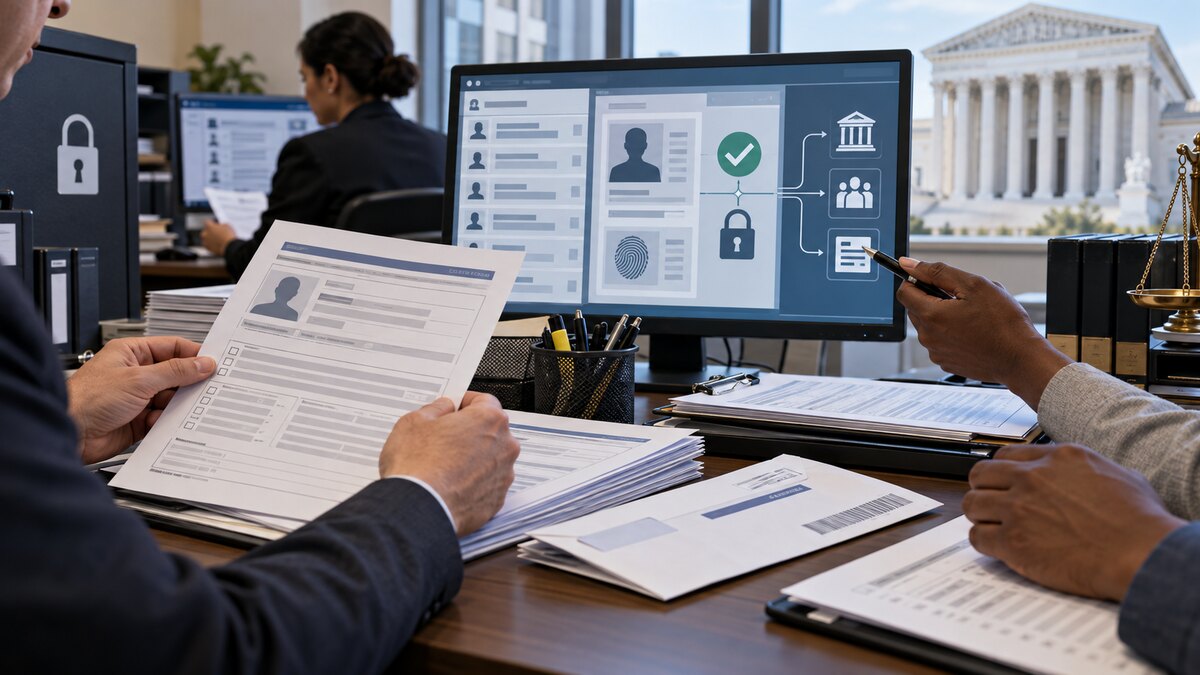
Featured image is an original editorial illustration.