








SALT LAKE CITY — A coalition of conservation groups has sued the federal government over an eastern Utah road project that plaintiffs say would damage historic inscriptions left by Black U.S. Army soldiers known as Buffalo Soldiers.
The lawsuit, filed Oct. 6 in the U.S. District Court for the District of Utah, challenges the Bureau of Land Management’s approval of plans to realign and pave part of Wells Draw Road through Gate Canyon. The plaintiffs are the Nine Mile Canyon Coalition, Southern Utah Wilderness Alliance and Center for Biological Diversity.
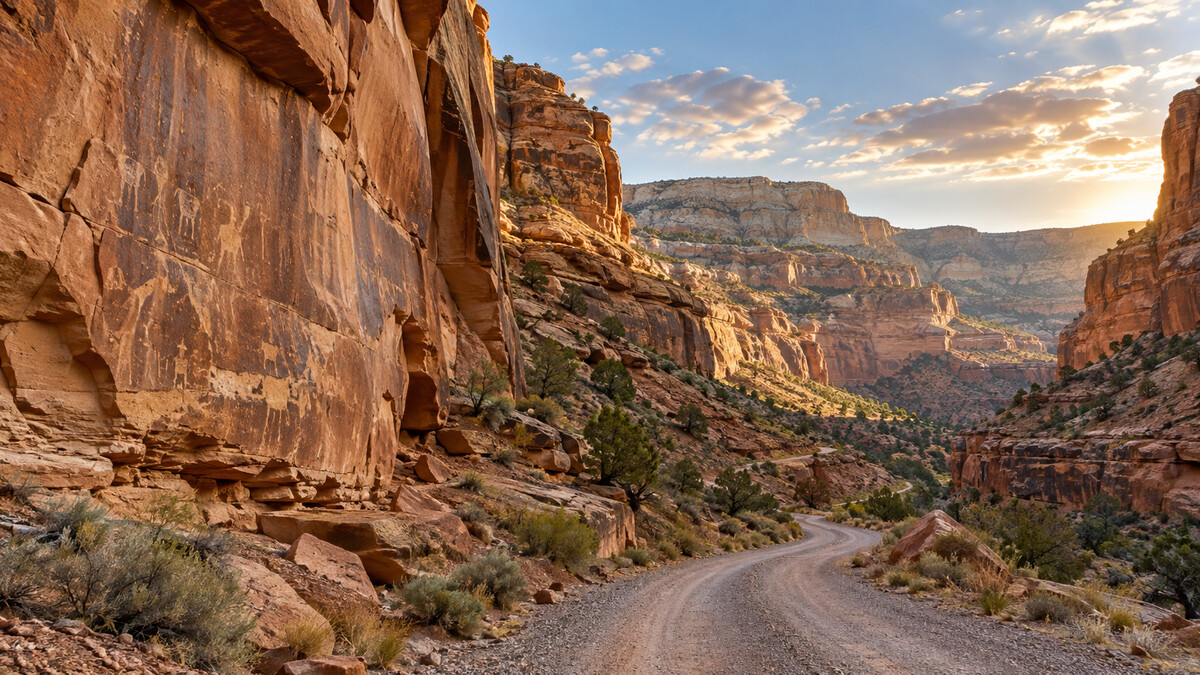
According to Reuters, the complaint says road construction would require blasting portions of canyon walls rising as high as 100 feet and would threaten at least 47 historic sites. Those locations include names carved into the rock by Black soldiers who helped build the existing road in the 19th century, along with markings left by freighters and European American pioneers.
The case places a lesser-known chapter of Black military history at the center of a modern dispute over energy transportation and public-land management. Buffalo Soldiers served in segregated Army regiments after the Civil War and performed difficult assignments across the West, including building roads, protecting travel routes and staffing frontier posts.
What the road project would do
BLM project records describe Wells Draw Road as an unimproved dirt route with sharp curves and limited sightlines. Duchesne County Special Services District No. 2 proposes reconstructing about 5.3 miles, with roughly half of the route crossing BLM land and the remainder on land administered by the Utah Trust Lands Administration.
The BLM approved the federal portion on April 28, 2026, after completing an environmental assessment and issuing a finding of no significant impact. The agency said the amendment would allow the county to realign and pave the road.
The conservation groups contend the review was rushed and did not adequately examine potential harm to cultural resources, threatened wildlife and the larger Nine Mile Canyon landscape. Their complaint alleges violations of federal environmental, historic-preservation and endangered-species laws. Those claims have not yet been decided by the court.
The Interior Department, which oversees the BLM, declined to comment to Reuters because the case is pending.
A landscape rich in history
Gate Canyon connects with Nine Mile Canyon, a 46-mile corridor known for an extraordinary concentration of Indigenous rock art. The BLM says the wider area contains more than 1,000 rock-art sites and over 10,000 images, some dating to prehistoric times.
The proposed route is also intended to improve access between counties and provide an alternative transportation corridor serving the Uinta Basin oil fields. Plaintiffs argue that additional heavy-truck traffic could put cultural sites, scenic resources and wildlife habitat at greater risk.
The court has not blocked construction or ruled on the merits. The lawsuit asks a federal judge to review the BLM’s decision and halt the approval until the agency complies with the laws cited in the complaint.
For Black-history advocates, the dispute underscores how traces of African American service can remain embedded in remote landscapes and vulnerable to development. The outcome could determine whether the Buffalo Soldiers’ marks endure as part of the nation’s public record or are altered by a major road project.
Sources: Reuters; U.S. Bureau of Land Management; federal court docket.