








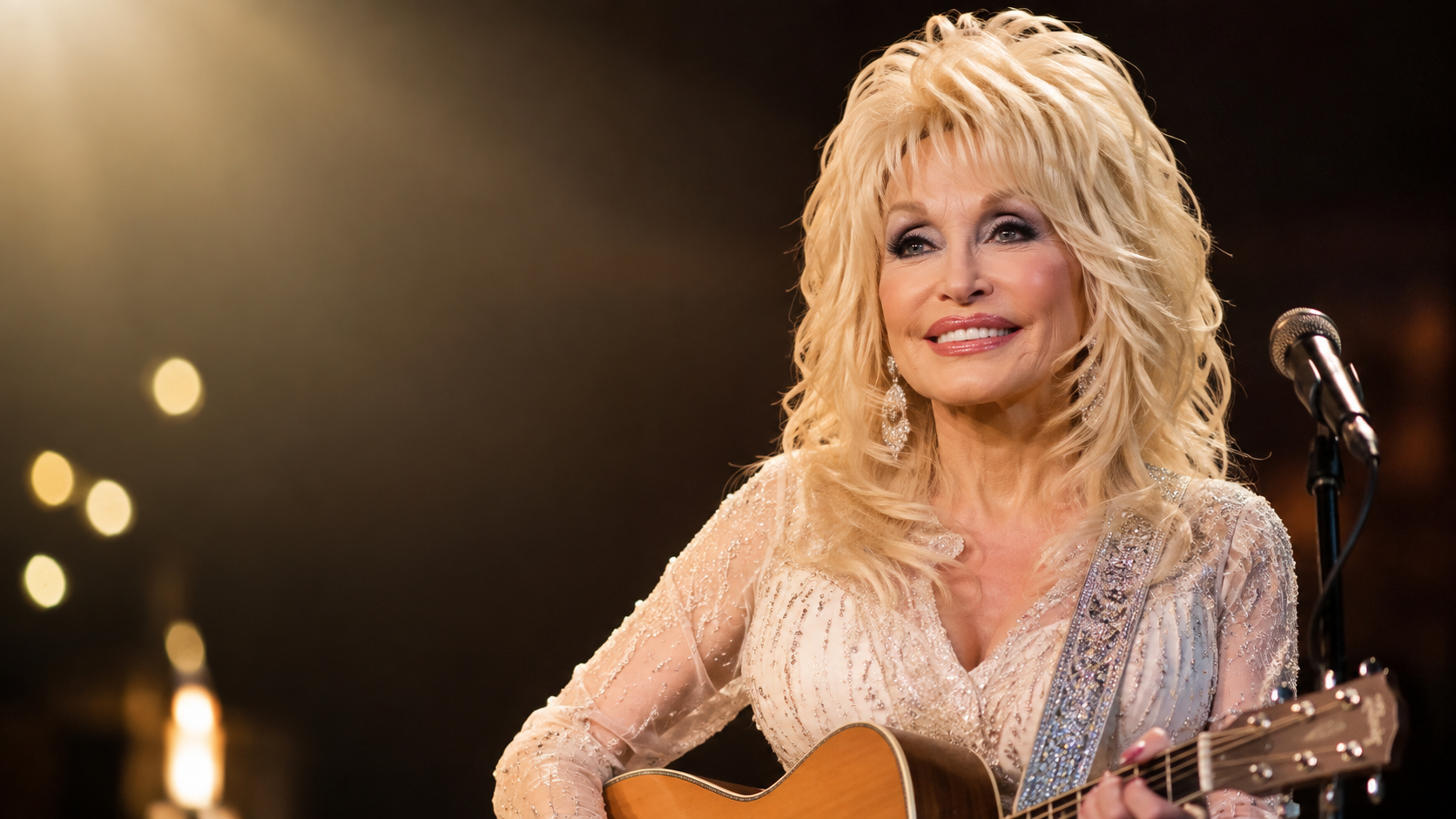
Dolly Parton, the legendary singer, songwriter, actress and philanthropist whose music stretched far beyond the boundaries of country, has died at the age of 80.
Parton died Tuesday in Nashville, according to reports confirmed by her family. Her death closes a remarkable chapter in American music history, leaving behind a catalog of songs and a cultural influence that reached audiences across racial, regional and generational lines.
Born Jan. 19, 1946, in rural Tennessee, Parton grew up in a large family with limited financial resources before transforming herself into one of the most recognizable entertainers in the world. Over a career spanning more than six decades, she became known for classics including “Jolene,” “Coat of Many Colors,” “9 to 5” and “I Will Always Love You.”
For many Black music fans, Parton’s connection to Whitney Houston remains an especially important part of her legacy. Parton wrote and originally recorded “I Will Always Love You” in the 1970s. Nearly two decades later, Houston delivered a soaring reinterpretation for the 1992 film The Bodyguard. Houston’s recording became a worldwide phenomenon and introduced Parton’s songwriting to millions of listeners who may never have followed country music.
The collaboration was not a traditional studio partnership, but it became one of popular music’s most memorable examples of a song crossing musical and cultural boundaries. Parton frequently spoke with appreciation about Houston’s interpretation, while Houston’s performance helped cement the composition as one of the most recognizable love songs of all time.
Parton’s influence extended well beyond the recording studio. She became a successful actress with roles in films including 9 to 5 and built a major business presence through Dollywood, the Tennessee theme park bearing her name. Her songwriting catalog eventually grew to thousands of compositions, while her recordings sold more than 100 million copies worldwide.
She was also celebrated for philanthropy. Her Imagination Library program has provided books to children in communities around the world, reflecting Parton’s long commitment to literacy. She also contributed $1 million toward research that helped support development of a COVID-19 vaccine and provided assistance to families affected by devastating wildfires in Tennessee.
Parton’s accomplishments included multiple Grammy Awards, membership in the Country Music Hall of Fame and recognition across the entertainment industry. Yet much of her popularity came from something awards could not fully measure: her ability to connect with people who might otherwise have had little in common.
Her husband, Carl Dean, whom she married in 1966, died in 2025 after nearly six decades of marriage. Parton continued working and making public appearances into her later years, maintaining the humor, distinctive style and unmistakable Tennessee voice that had made her famous.
Dolly Parton leaves behind more than a collection of country hits. Her music became part of the broader American songbook, interpreted by artists from different genres and backgrounds and embraced by listeners around the world.
For generations who knew her through country radio, Hollywood, philanthropy—or through Whitney Houston’s unforgettable voice singing a song Parton wrote decades earlier—her influence will continue long after her final curtain.