








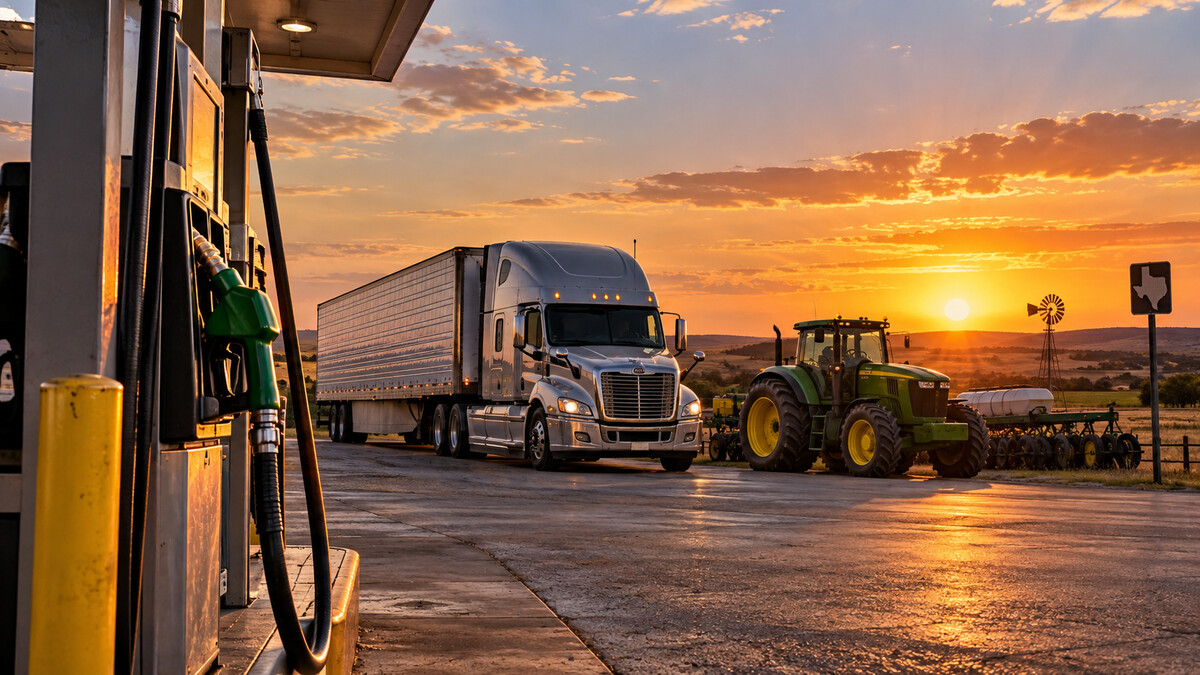
AUSTIN, Texas — Gov. Greg Abbott declared a statewide disaster Monday in response to record diesel costs and tight fuel supplies, temporarily loosening transportation and fuel rules in an effort to reduce pressure on Texas farmers, truckers and consumers.
The 30-day declaration expands the circumstances in which tax-exempt, red-dyed diesel may be used on public roads. It also increases allowable weights for certain fuel, agricultural and timber loads and suspends Texas Low Emission Diesel requirements to the extent permitted by federal law, according to reporting published Sept. 28 by The Texas Tribune.
Abbott also asked the U.S. Environmental Protection Agency to waive federal ultra-low-sulfur diesel requirements, a step intended to make more fuel available. The declaration may be extended if the shortage continues.
“Texas agriculture and freight run on diesel,” Abbott said in announcing the action. His office argued that easing the rules could lower costs for farms, freight carriers and stores that depend on commercial deliveries.
The statewide average diesel price was $5.86 per gallon Monday, according to AAA data cited by the Tribune. That compares with about $3.30 per gallon in early February. Diesel powers much of the heavy transportation network that moves groceries, building materials and other goods across Texas, so sustained increases can filter into prices paid by families and small businesses.
What the order changes
Dyed diesel is chemically similar to the clear diesel sold for highway use, but it is normally reserved for off-road equipment such as tractors and construction machinery. The red dye identifies fuel that is exempt from certain road taxes, and using it in highway vehicles is generally prohibited outside authorized emergencies.
Abbott’s order allows broader road use during the emergency. It does not eliminate Texas’ underlying 20-cent-per-gallon motor-fuel tax on gasoline and regular undyed diesel, the Tribune reported.
The higher load limits could allow some carriers to move more fuel, crops or timber per trip. Whether those measures produce noticeable savings at the pump or grocery store will depend on supply, enforcement details and how much of any cost reduction businesses pass to customers.
The Texas action comes as federal officials consider similar relief. Reuters reported Monday that the White House is weighing broader access to dyed diesel and voluntary limits on fuel exports. The national average diesel price has climbed above $6 per gallon amid global supply disruptions.
Some energy analysts caution that tax and regulatory waivers do not create new fuel. Patrick De Haan, GasBuddy’s head of petroleum analysis, told Reuters that expanding access to dyed diesel may reduce taxes for eligible users but would not by itself correct the underlying supply imbalance.
Political debate over relief
The emergency declaration immediately became part of Texas’ broader debate over affordability ahead of the Nov. 3 midterm election. Democratic gubernatorial candidate Gina Hinojosa called for suspension of the state gasoline tax. Abbott’s office has said the governor cannot unilaterally waive state taxes.
For Texas households, the immediate question is whether the emergency measures slow the rise in transportation-related costs. Diesel is central to the state’s agriculture, construction, energy and freight industries, making the issue larger than the price displayed at truck stops. If high fuel costs persist, businesses may continue passing added expenses through delivery fees and higher shelf prices.
The order is temporary, and additional federal approval is required for some of the requested relief.