








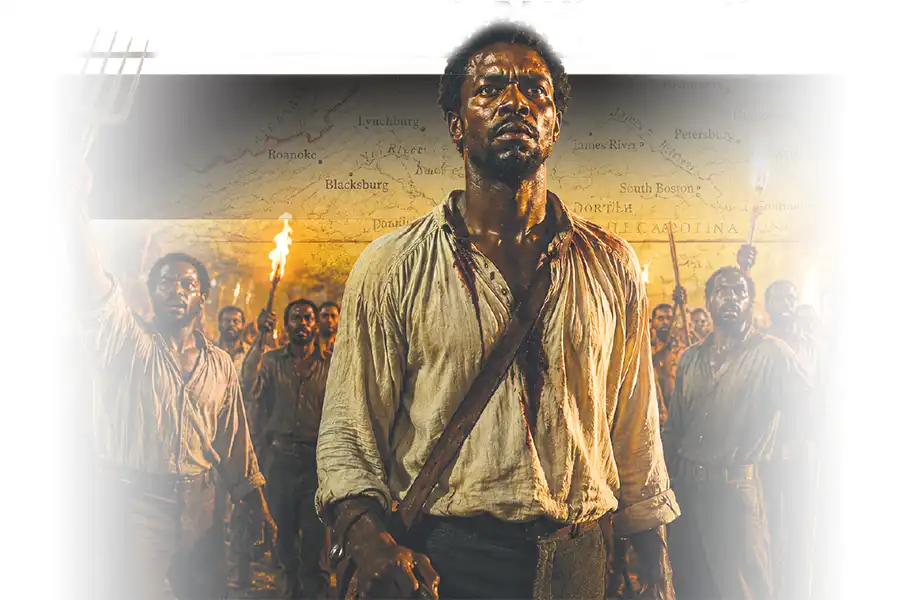
Nat Turner’s Revolt, also known as the Southampton Insurrection, was one of the most significant uprisings against slavery in American history. It took place in Southampton County, Virginia, in August 1831, at a time when slavery shaped much of the economy and social structure of the American South. Nat Turner was an enslaved Black preacher who became deeply opposed to the system that denied freedom and basic rights to millions of African Americans.
His revolt became a powerful and controversial chapter in the long struggle against slavery.
Turner was born into slavery in Southampton County in 1800. From an early age, he became known for his intelligence and strong religious beliefs. He learned to read and developed a reputation among other enslaved people as a preacher
and spiritual leader. Turner believed that his religious experiences were directing him toward a mission against slavery. Over time, he became convinced that he was called to challenge the system through an organized uprising.
On August 21, 1831, Turner and a small group of followers began their revolt. As the uprising spread through the countryside, additional enslaved men joined the group. Over roughly two days, the rebels moved through Southampton County, attacking slaveholding households and killing about 55 to 60 white people. Local militia forces eventually suppressed the revolt, and many participants were captured or killed. Turner escaped capture for more than two months by hiding in the surrounding area. Authorities finally discovered him in late October 1831.
He was arrested, tried, convicted, and executed in November. In the aftermath of the revolt, white militias and armed groups retaliated against Black communities, and many Black people who had no involvement in the uprising were killed or punished.
The revolt created widespread fear among Southern slaveholders and led Virginia and other Southern states to strengthen laws controlling enslaved and free Black people. Restrictions were placed on education, religious gatherings, movement, and assembly because lawmakers feared that literacy, independent churches, and organized meetings could contribute to future resistance. Rather than addressing the brutality that helped produce resistance, many Southern governments responded by tightening the institution of slavery. Nat Turner’s Revolt remains historically important because it demonstrated that enslaved people did not simply accept their oppression. Turner’s actions also sparked intense debates about slavery, resistance, freedom, and the lengths people might take to escape bondage.