







Texas has stopped issuing new state permits for data centers while regulators examine how the fast-growing industry is affecting the electric grid, water supplies and household costs.
Gov. Greg Abbott directed the Texas Commission on Environmental Quality on Monday, September 21, to withhold new permits from data-center developers until state reviews are completed. The order expands a regulatory pause that began with new grid connections and comes as artificial-intelligence computing drives a wave of large, power-hungry projects into Texas.
Reuters reported that data centers and other large users seeking access to the Texas grid represent more than 470 gigawatts of proposed demand—more than five times the state’s peak electricity use. Not every proposed project will be built, but the size of the queue has raised concerns about whether ordinary customers could be left paying for transmission lines and other infrastructure built around speculative developments.
The Electric Reliability Council of Texas, which manages most of the state’s power grid, is reviewing data-center electricity use, tax incentives and water consumption. Abbott said developers must cover the costs they create and protect state resources while the reviews proceed.
The freeze marks a sharp turn for a state that has aggressively courted technology investment with inexpensive land, abundant energy and a business-friendly regulatory climate. Data centers can bring construction work and taxable investment, but they also require enormous and steady supplies of electricity. Many facilities use substantial amounts of water for cooling, an added concern in communities already confronting drought, rapid growth and aging infrastructure.
State utility regulators are also tightening the rules for major power users. According to the San Antonio Express-News, the Public Utility Commission of Texas approved a requirement that projects of 75 megawatts or more pay a $50,000-per-megawatt security deposit and a $100,000 study fee before an interconnection review begins. Developers must also demonstrate control of the project site and provide more detailed information about their expected operations and water use.
Those requirements are intended to separate serious projects from speculative applications and reduce the risk that ratepayers finance infrastructure for developments that never materialize. Projects that provide inaccurate information or withdraw after receiving capacity may lose part of their deposit.
The public-health stakes are also coming into focus. Three environmental groups filed a federal lawsuit this month accusing developers of two San Antonio data-center campuses of using permits meant for smaller pollution sources for gas-fired plants that would power the facilities. The allegations have not been proven in court, and the companies did not respond to the Express-News’ requests for comment. The case highlights growing demands for public input before large industrial projects are placed near residential communities.
For Houston-area residents, the state review could influence future electricity bills, water planning and where major industrial facilities are built. The University of Houston’s Ed Hirs told Reuters that Abbott’s action reverses earlier claims that data-center growth would help lower power prices.
The permit suspension does not mean Texas is abandoning the industry. It means new projects must wait while regulators determine their true demands and who should pay for them. The central question is whether the state can capture the economic benefits of the AI boom without shifting its infrastructure and environmental costs onto Texas families.
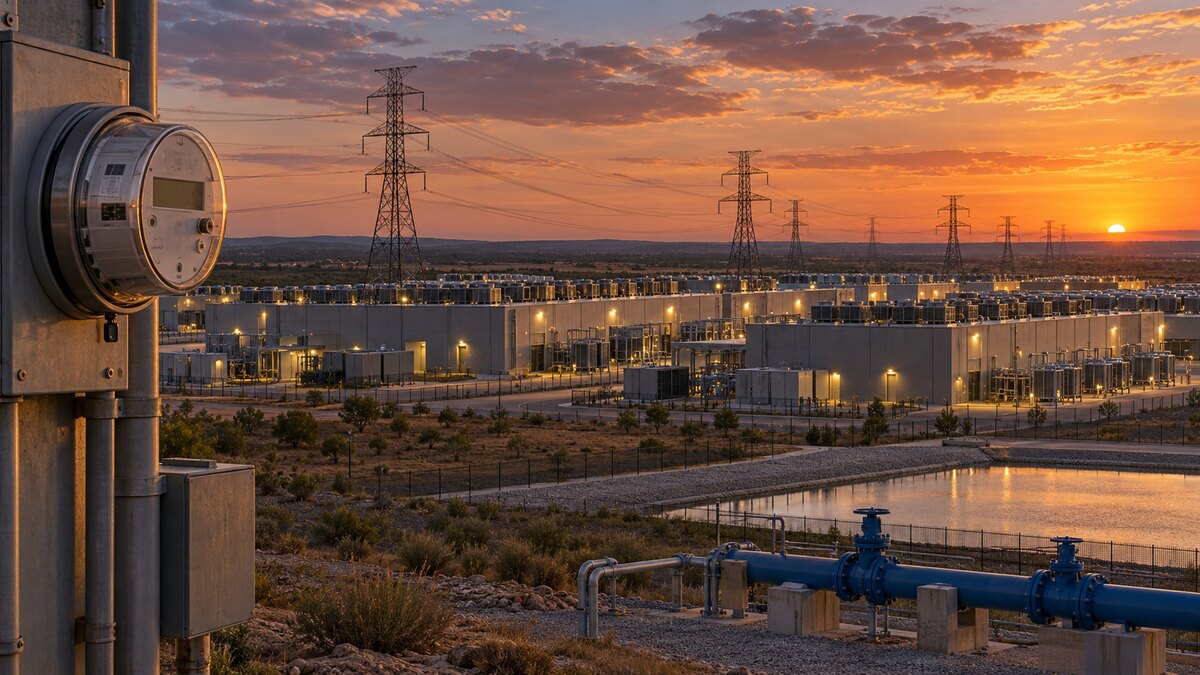
Featured image is an original editorial illustration.