








By: Roy Douglas Malonson
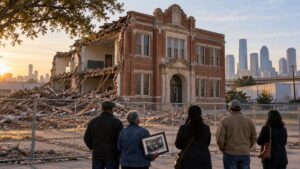
For decades, historic Black neighborhoods have served as living records of resilience, culture, and survival. These communities were built during a time when segregation forced Black families to cre- ate their own economic systems, social networks, and cultural institutions. Today, many residents fear those foundations are being slowly stripped away as gentrification reshapes inner-city America.
What is often labeled as “revitalization” can feel very different on the ground. New developments arrive promising opportunity, yet longtime residents are left grappling with higher property taxes, rising rents, and a growing sense that their neighbor- hoods are no longer designed for them. Homes once passed down through generations are suddenly surrounded by upscale housing, boutique businesses, and investors with little connection to the community’s history.
The concern goes beyond money. Culture itself is at risk. Local Black-owned businesses that once anchored these neighborhoods struggle to compete with national chains. Historic churches see congregations shrink as families relocate farther from the city core. Streets that once echoed with familiar faces now feel unfamiliar, leaving residents to wonder whether progress requires erasing the past.
Supporters of redevelopment argue that investment brings safer streets and improved services. Critics counter that those benefits rarely reach the people who endured decades of neglect before the neighborhood became “valuable.” Instead, they say, the rewards flow to new- comers, while original residents are pressured to leave the very com- munities they built.
As gentrification continues to expand, the question facing cities is no longer whether change is coming, but who gets to stay when “progress” arrives—and whose history gets left behind.