








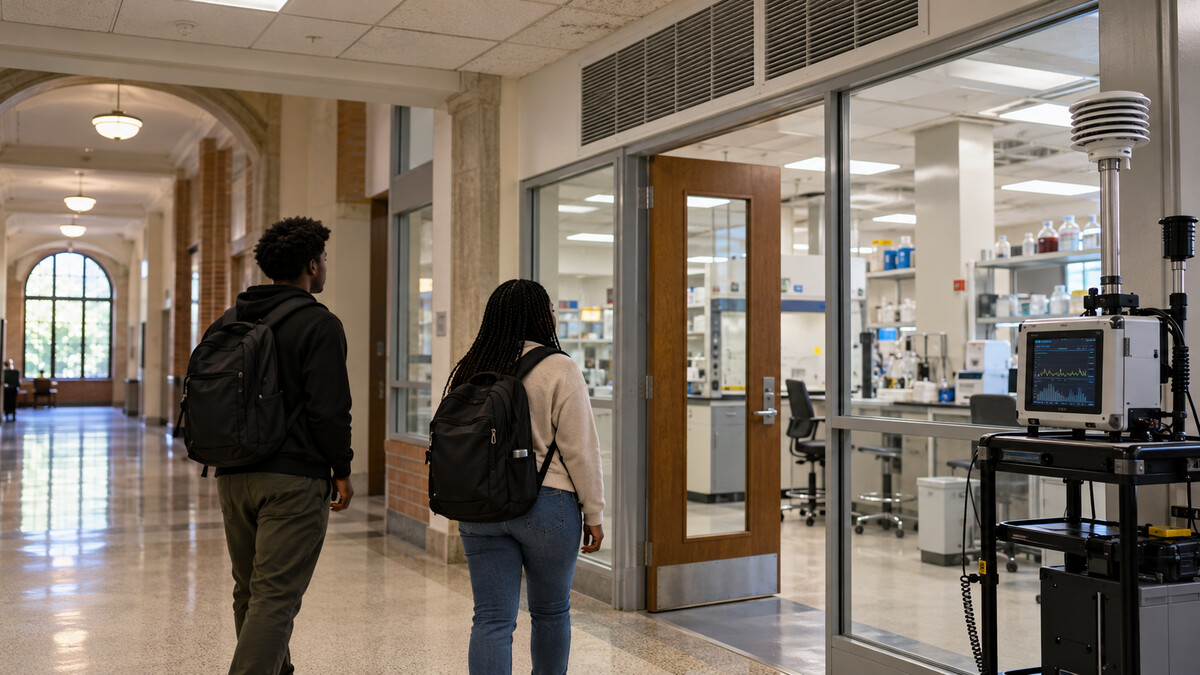
HOUSTON — Texas Southern University has reopened its Science Building after a nearly two-month closure, but some students say musty odors and other signs of possible moisture problems remain inside the facility.
The building reopened Monday, Oct. 5, after closing Aug. 17 because of mold, condensation and indoor-air-quality concerns, according to FOX 26 Houston. The shutdown moved science courses online during the first half of the fall semester and kept students away from laboratories needed for hands-on instruction.
TSU told the station that Honesty Environmental Services conducted an independent assessment on Sept. 29. Air samples were collected at 20 locations inside the building, and the consultant recommended no further environmental action, according to the university.
Students who returned this week offered a different account of conditions. They reported persistent musty smells and said they saw what appeared to be mold on some classroom furniture. Those reports have renewed questions about whether the remediation fully addressed the source of the building’s problems.
The concerns are especially significant during midterm examinations. Students in laboratory-based majors said the closure limited practice with equipment and experiments, potentially weakening the experience they can present when applying for internships and other opportunities.
FOX 26 reported that the environmental contractor declined to release its findings or discuss its testing methods, citing a nondisclosure agreement. The station has filed a Texas Public Information Act request seeking the complete air-sampling results and remediation records.
Texas Southern’s Student Government Association is planning an open forum with university officials, according to the report. The meeting is expected to give students an opportunity to seek details about the testing, cleanup work and any continuing monitoring of the building.
A Baylor College of Medicine specialist interviewed by FOX 26 said mold exposure can aggravate conditions such as asthma and chronic sinusitis in people who are susceptible. The presence of an odor alone does not establish the level or type of contamination, but experts say persistent mustiness should not be dismissed when occupants continue to raise concerns.
The dispute comes as the historically Black university begins a major facilities overhaul. TSU recently broke ground on a new Nabrit Science Center, part of a $1.7 billion, 10-year campus master plan. The planned center is designed to expand advanced laboratory infrastructure, research capacity and training opportunities.
For current students, however, the immediate question is whether the reopened building can support safe, uninterrupted learning now. Transparent release of the underlying test results and a clear plan for follow-up inspections could help the campus community evaluate the competing accounts and rebuild trust.