









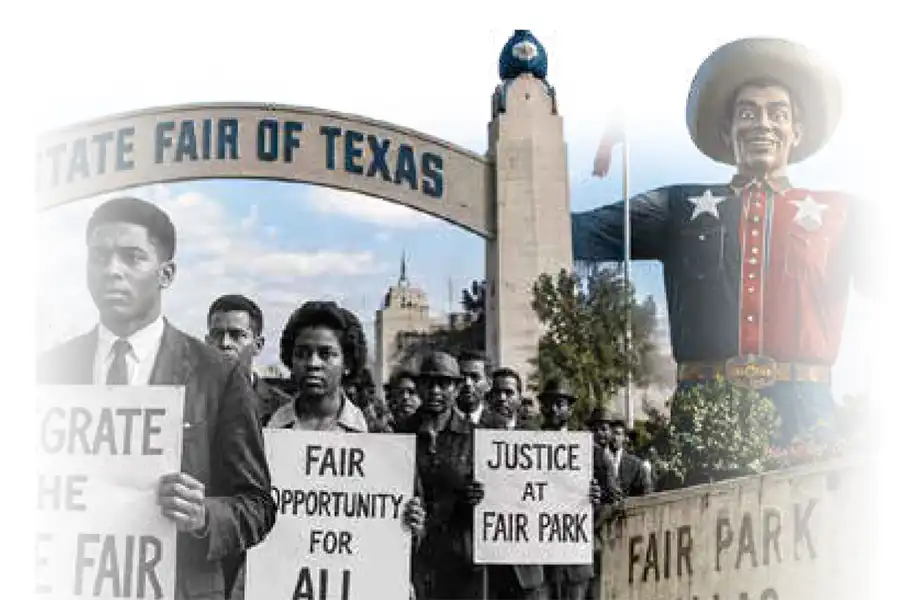
For generations, the State Fair of Texas has been one of Dallas’s most recognizable traditions. Held at Fair Park, the annual event brings together millions of visitors for entertainment, food, exhibits, music, and celebrations of Texas culture. But during segregation, the fair also reflected the racial divisions that shaped Dallas. African Americans were not allowed to attend freely on the same terms as white visitors. Instead, Black Texans were largely restricted to a designated day known as “Negro Achievement Day.”
In 1955, civil rights activist Juanita J. Craft and members of the Dallas NAACP Youth Council challenged that policy.
Their campaign became an important part of the larger struggle to desegregate Dallas and eliminate racial discrimination from public institutions.
The restrictions at the fair were part of a broader system of segregation. African Americans faced discrimination in schools, restaurants, theaters, stores, transportation, and other public places. The State Fair was particularly important because it was one of Dallas’s largest public events. The policy of giving Black residents only one designated day became a powerful symbol of racial inequality.
Juanita Craft was one of Dallas’s most important civil rights organizers. She joined the NAACP in 1935 and became deeply involved with its Youth Council. Craft believed young people could play a major role in challenging discrimination through peaceful protest, organization, and civic participation.
In October 1955, Craft helped organize a protest against the State Fair’s segregated admission policy. Members of the NAACP Youth Council picketed outside Fair Park and encouraged African Americans to boycott Negro Achievement Day. The demonstration was conducted peacefully, drawing attention to the unequal treatment of Black fairgoers.
The protest represented more than a dispute over admission to a fair. Activists were challenging the larger principle of “separate but unequal” treatment. For the young protesters, the demonstration also provided an important lesson in citizenship, organization, and peaceful activism.
The 1955 protest did not immediately end segregation at the State Fair. Craft and members of the Youth Council continued challenging discriminatory policies at the fair and other Dallas businesses and institutions. Their campaign became part of a broader movement that included protests at theaters, restaurants, lunch counters, and stores.
The State Fair campaign also demonstrated the importance of young people in the civil rights movement. Craft encouraged young activists to become organizers rather than simply observers. Under her leadership, members of the Youth Council learned how to protest peacefully, distribute information, organize supporters, and demand changes to discriminatory policies.
After years of activism, the State Fair of Texas was fully desegregated in 1967. The change marked an important moment in Dallas’s civil rights history and ended the practice of restricting African Americans to a special day.
Juanita Craft’s work extended far beyond the State Fair. She participated in efforts to integrate schools and universities and challenged discrimination throughout Dallas. Her home in South Dallas also became an important gathering place for civil rights activists.
Today, the State Fair is primarily known for food, rides, music, exhibits, and entertainment. Yet its history also reflects the struggle for racial equality. The 1955 protest led by Juanita Craft and the Dallas NAACP Youth Council demonstrates how sustained, peaceful community activism can challenge discriminatory institutions.
The desegregation of the State Fair was not achieved overnight. It took years of organizing and persistence. The activists who challenged the fair helped transform a segregated public event into one that could be enjoyed by Texans regardless of race, leaving an enduring chapter in the civil rights history of Dallas and Texas.