








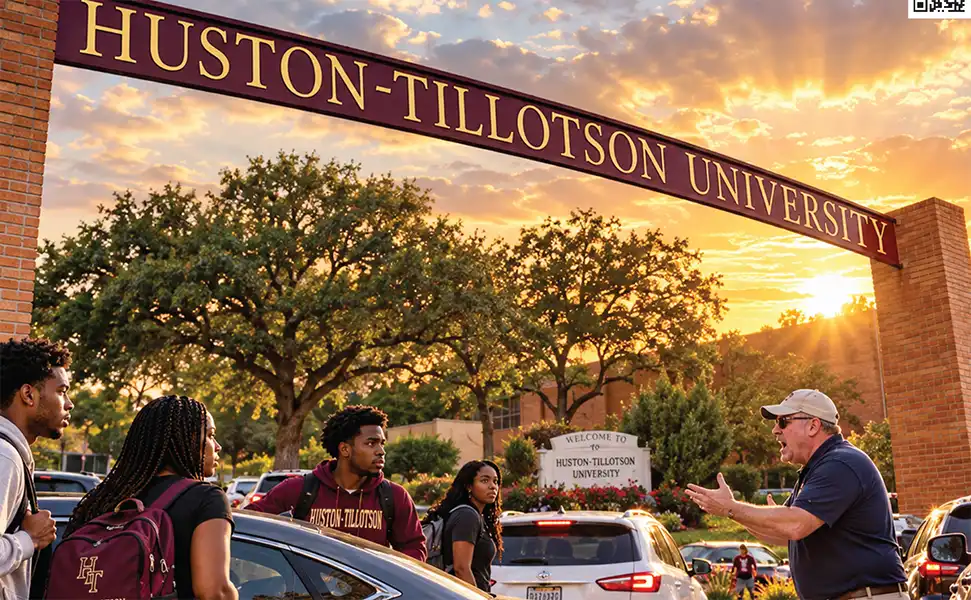
The viral parking dispute on East 9th Street next to Huston-Tillotson University in Austin, Texas, is more than an argument over street parking. When a local homeowner told a Black student that her $1.5 million house gave her the right to judge the school’s graduation rates, it exposed a deep, painful wound. This con flict is a direct result of gentrification, a process that has rapidly changed East Austin. To understand why a video about parking spots caused large protests, one must look at the history of how Black residents were forced into East Austin, and how they are now being priced out of it.
The Root of Division: The 1928 Master Plan To understand modern East Austin, you have to look back to 1928. That year, the City of Austin created a “Master Plan” that forced all Black residents to move to the east side of town. The city did this by refusing to give utilities like water, electricity, and sewage to Black families unless they lived in a specific area on the east side of East Avenue (which is now Interstate 35). Black schools, churches, and businesses were all forced into this single zone. Because of this structural segregation, East Austin became the heart of the city’s Black culture and community. For nearly a century, it was a safe place where Black families owned homes, opened businesses, and raised children.
At the very center of this community was Huston Tillotson University. Founded as a historically Black university (HBCU), it provided higher education to Black Americans who were locked out of white universities. It became a powerful symbol of Black freedom, education, and pride in Texas. The Shift: Gentrification and Rising Prices Over the last twenty years, Austin has grown into a major technology and business hub. As the city became more expensive, developers looked across Interstate 35 to East Austin. Because the land there had been kept artificially cheap due to years of segregation and lack of city investment, developers saw it as a goldmine.
Rich buyers started moving into the neighborhood. They built large, expensive houses right next to older, modest family homes. This process is called gentrification. As a result, property taxes skyrocketed. Many Black families who had owned their homes for generations could no longer afford the taxes and were forced to sell and leave. Between 2000 and 2010, East Austin lost a huge percentage of its Black population. Today, multimillion-dollar modern homes sit right across the street from historic Black institutions The Parking Dispute: A Clash of Two Worlds the parking dispute between a student named Bri and the local homeowners shows what happens when these two worlds collide. The street parking spaces on East 9th Street are public, meaning anyone can legally park there. However, the homeowners felt entitled to the space because of the high price they paid for their house.
When the homeowner brought up the school’s graduation rates and her $1.5 million home value, she used her wealth as a weapon. Her comments suggested that because she had more money, her voice mattered more than the history of the school and the community. For the students and longtime residents, this was a clear statement that the new, wealthy neighbors looked down on the Black institution that had been there first.
The Community Response and Its Meaning The reaction from the community was swift and powerful. Students and allies gathered outside the home to protest peacefully. They brought music and signs reading, “You bought a house, not our history.” is protest was not just about a parking spot. It was a stand against the erasure of Black history in Austin. It was a way for the community to say that money cannot buy ownership over a neighborhood’s culture. Longtime residents and students felt they were being treated as outsiders in their own home.
Conclusion: What this Teaches Us
The Huston-Tillotson parking dispute shows that gentrification is about more than just changing buildings and rising prices. It changes how people treat each other. When wealthy newcomers move into historically marginalized neighborhoods without respecting the people and history already there, conflict is inevitable. Huston-Tillotson University stands as a monument to Black resilience against segregation. The public street belongs to everyone, but the history of East Austin belongs to the community that built it. True neighborhood growth requires newcomers to respect the history, culture, and institutions that were there long before them. Would you like to expand this essay to include specific statistics on East Austin’s population shifts, details on HBCU funding disparities, or a section on how the university officially responded to the incident?