








The U.S. Supreme Court agreed Monday to hear a challenge to a Maryland public school district’s admissions system, returning the justices to the national debate over race, equal protection and access to selective schools.
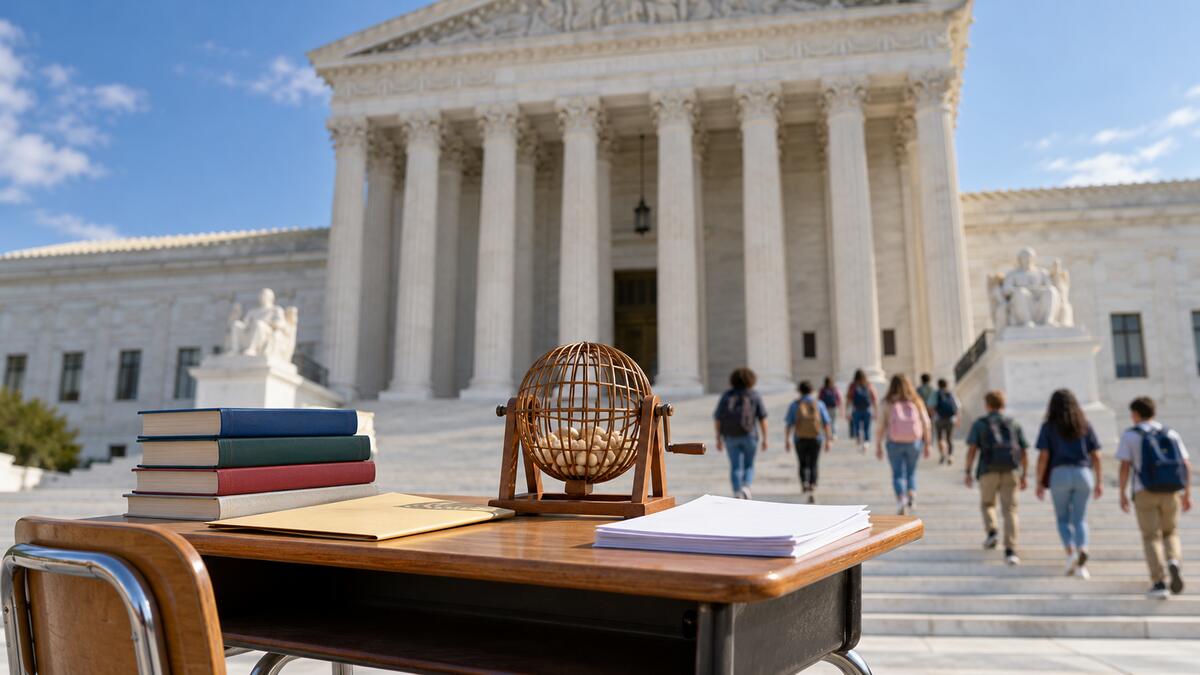
The case, Association for Education Fairness v. Montgomery County Board of Education, involves a lottery used to place students in four academically selective public middle-school programs. A coalition of mostly Asian American parents argues that the system was designed to reduce Asian American enrollment and therefore violates the 14th Amendment’s Equal Protection Clause.
According to Reuters, the policy first screens students for academic potential and then uses a lottery to assign qualified students to enriched programs at magnet schools or local schools. Part of the screening compares students’ test performance with that of peers from families at similar income levels.
The challengers say that approach disadvantages Asian American students who attend high-performing, low-poverty elementary schools. The school district has defended the policy as race-neutral.
A federal district judge dismissed the lawsuit, finding no evidence that the policy was adopted with discriminatory intent and noting that Asian American students’ share of admissions exceeded their share of the applicant pool. The U.S. Court of Appeals for the 4th Circuit upheld that dismissal in February.
The Supreme Court will now consider whether a court may reject an intentional-discrimination claim when the challenged policy does not produce an overall disparate impact on the racial group bringing the case. The Court’s official docket identifies the case as No. 26-12.
The dispute is closely watched because it could affect how public school districts design admissions systems intended to widen access without explicitly considering a student’s race. Policies based on neighborhood, family income or school-level opportunity have become more important since the Supreme Court’s 2023 decision ending race-conscious admissions at Harvard University and the University of North Carolina.
For Black families and other communities historically underrepresented in selective academic programs, the ruling could clarify how far districts may go in using race-neutral tools to address unequal access. It also could set a new standard for proving intentional discrimination under the Constitution, even when broad enrollment data do not show a numerical disadvantage.
The justices are expected to hear arguments during the current term and issue a ruling by the end of June.